
Tenerife Cabildo has a year to regulate vehicle access to Teide National Park
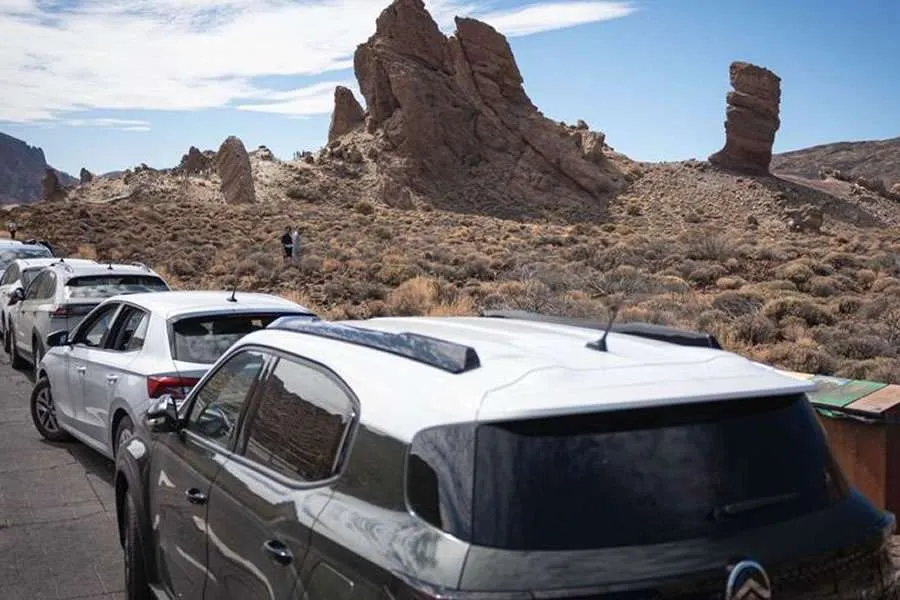
The Tenerife Cabildo have confirmed it will take around a year to fully regulate vehicle access and mobility within Teide National Park, following the transfer of powers from the Canary Islands Government.
Speaking at a press conference on Wednesday, José Miguel Ruano, Vice-President of the Cabildo, said the new timetable will allow them to introduce a structured system to manage the growing pressure on Spain’s most visited national park.
Transport controls and limited parking
Ruano explained that the current Management and Use Plan, which has been challenged in court by environmental groups, goes beyond purely environmental measures. It also focuses on access to the park, including temporary steps such as encouraging public transport, restricting entry during certain time slots, and controlling the number of private vehicles allowed entry.
Parking is a key issue as there are a very limited number of designated parking areas. As a result, the Cabildo plans to introduce access controls similar to those already used for popular hiking routes, meaning that the public may need prior authorisation to enter the park by car.
As an example, Ruano pointed to the recent snowfall, when a shuttle bus system was put in place. He said this significantly improved visitor management and allowed large numbers of people to see the snow safely and in an orderly way.
Fees aimed at control, not profit
The Cabildo has also defended the recent introduction of charges to access the Teide summit and certain trails, which residents of Tenerife are exempt from paying.
According to Ruano, the measure is not about raising money but about controlling visitor numbers and balancing public enjoyment with conservation. He described it as a “major step forward”, building on rules introduced late last year that require visitors to have appropriate mountain equipment. This followed repeated incidents of people attempting to reach the summit in unsuitable footwear and clothing despite alpine conditions.
The council believes small eco-fees are an effective way to manage access to fragile natural spaces, similar to existing controls in places such as the Masca ravine.
€13,000 raised in first 24 hours
In the first 24 hours of the new eco-fee system, the Cabildo collected €13,243 through its digital booking platform. A total of 704 reservations were registered on the opening day, with 424 subject to payment as they involved non-residents or visitors not covered by exemptions.
On that day, 1,346 places were allocated: 46 for Tenerife residents, 36 for Canary Islands residents, 108 for under-16s, and 1,156 for non-residents. The number of bookings was in line with previous weeks (when it was free), indicating no immediate drop in demand.
Guided visits also continued as normal, with six licensed guides booking places for a total of 28 people.
The eco-fee, which can reach up to €25 for non-resident visitors depending on the route chosen, is intended to fund conservation work, access control, infrastructure improvements, monitoring and long-term sustainability. Teide National Park is one of the Canary Islands’ most iconic natural sites and a UNESCO World Heritage Site.
For British tourists and residents, the message from the island council is clear: access to Mount Teide will remain possible, but with stricter controls designed to protect the landscape and improve safety and the overall visitor experience.
Share: