

Fisherman fined and banned after killing critically endangered angel shark
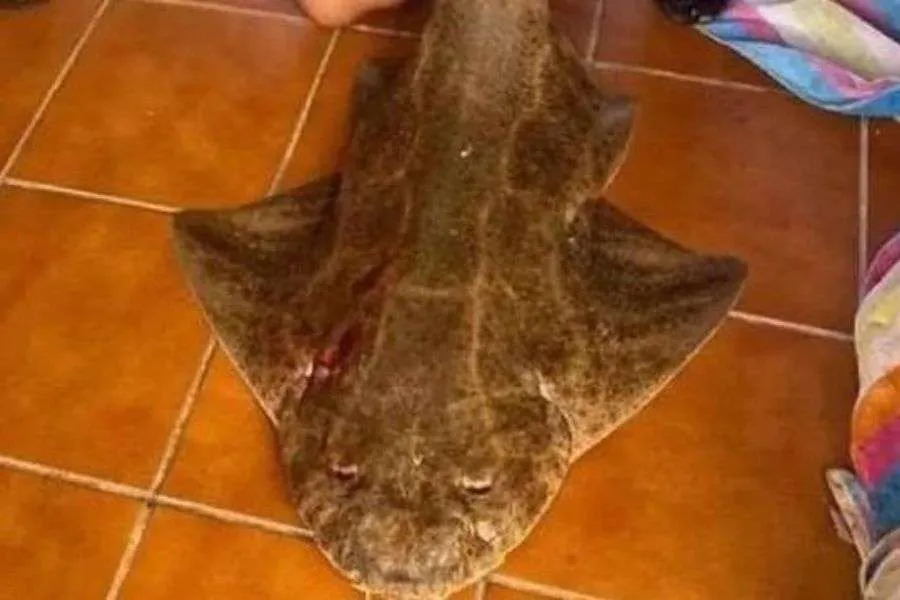
A Canary Islands fisherman has been banned from fishing for three years and fined more than €4,300 after being convicted of capturing and killing an angel shark, one of the most critically endangered shark species on the planet.
The ruling was issued by the criminal court of Arrecife, Lanzarote, which found the man guilty of an offence against wildlife for illegally fishing a protected species, under Article 334.1 of Spain’s Criminal Code. The case centres on the death of an angel shark (Squatina squatina), a species facing extinction and protected by the highest levels of Canary Islands, Spanish, European and international law.
The sentence includes a three-year ban from fishing and hunting, a fine calculated over 18 months at a daily rate of eight euros, and the payment of court costs. The judgment is final and cannot be appealed through ordinary legal channels.
The case came to light after the Canary Islands environmental organisation ADACIS filed a complaint with the Guardia Civil’s environmental unit, SEPRONA, in November 2023. The association acted after learning that at least one angel shark had been captured and dismembered, with evidence of the incident later circulating on social media.
ADACIS pursued the case as a private prosecutor for almost two years. This is the second conviction in which the organisation has been directly involved relating to the illegal fishing of protected marine species. In a previous case, a court convicted someone for promoting the fishing of protected rays and sharks in Lanzarote as a tourist attraction.
According to the court ruling, the fisherman acted knowingly and in direct breach of existing laws. The judgment references multiple legal frameworks, including Spanish ministerial orders, European Union regulations and the Spanish Catalogue of Threatened Species, all of which explicitly ban the capture of angel sharks. The species is excluded from any authorised recreational fishing and is considered strictly protected.
Environmental groups have described the ruling as an important legal precedent for marine conservation in the Canary Islands. ADACIS warned that the loss of even a single angel shark can have serious consequences for the survival of the species, particularly in the archipelago, which is one of the last places in the world where it can still be found.
Beyond its ecological importance, the angel shark also plays a role in the local economy through responsible wildlife observation linked to diving tourism. Conservationists argue that illegal fishing not only threatens marine biodiversity but also undermines sustainable tourism.
Share: