
The Slow Travel Movement: How to experience the Canaries beyond the all-inclusive resorts
Most people fly to the Canary Islands to drink a cold beer by a resort pool. It is a strange way to see a volcanic archipelago. Move just twenty minutes inland from the coast and the plastic atmosphere vanishes.
You find vertical ravines, ancient forests, and villages where life actually slows down. This is the essence of slow travel. Trade the wristband for house keys in a mountain village. The islands are not just a sun destination; they are a different world.
Choosing Your Way: Local Life vs. Resort Bubbles
Choosing the right base is the first step toward an experience that actually feels real. Forget the high-rise hotels. Instead, hunt for a "casa rural" or a "finca" tucked away in the northern hills.
These traditional stone houses usually come with gnarled lemon trees and views of the Atlantic that no sterilised five-star resort can hope to match. Staying in a village like Garafia on La Palma or Agulo on La Gomera changes your entire perspective. You become a neighbour, not just another customer.
Living like a local also means following the local passions, and in the Canaries, that means football. While a resort shuttle will never take you to a rowdy local stadium, travelling independently allows you to catch a UD Las Palmas or CD Tenerife match with the real fans.
If you are sitting in a mountain bar with the locals, you can check the latest odds on 1xBet IR to see how the home team is faring before heading to the stands. It is a completely different energy compared to watching a match on a tiny TV in a hotel lobby.
The Islands of Silence: La Gomera and El Hierro
If you want to escape the crowds, you have to change your geography. Fast. La Gomera and El Hierro are the sharp antidote to the mass tourism found on the larger islands. There are no direct long-haul flights here, which acts as a natural filter for the lazy traveller. You arrive by a small, rattling propeller plane or a ferry from Los Cristianos.
La Gomera is a vertical, green paradise. The centre of the island is home to the Garajonay National Park, a humid, prehistoric forest that looks exactly like it did millions of years ago. The trails are steep. They are demanding. You will find yourself walking through mist-covered ferns one hour and sun-scorched banana plantations the next.
El Hierro is even more remote. It is the first island in the world to aim for complete energy self-sufficiency using wind and water power. It feels like the edge of the world. Because, for a long time, it actually was.
Practical spots to visit for a quiet pace:
- La Restinga in El Hierro: A tiny fishing harbour famous for its volcanic diving sites and fresh lapas (limpets) served with green mojo.
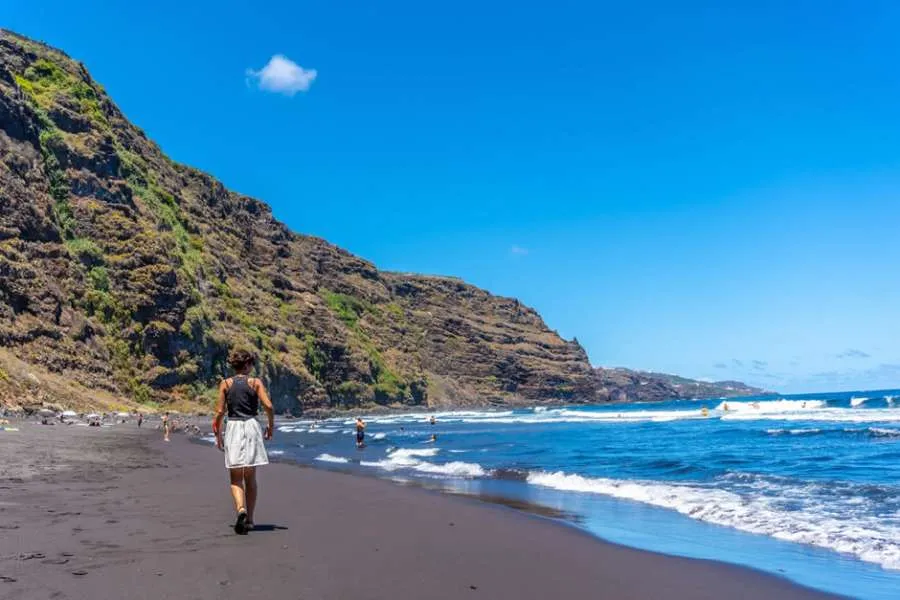
- Valle Gran Rey in La Gomera: A valley of palm trees and black sand beaches where the sunset is a daily communal event.
- Tamadaba Forest in Gran Canaria: A high-altitude pine forest that offers the best stargazing away from city lights.
Eating Like a Local
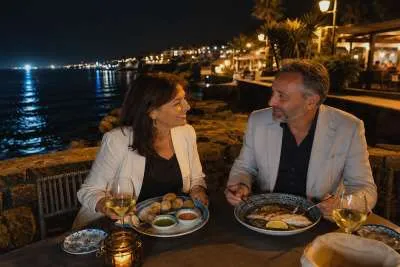
You cannot understand the Canaries if you eat in hotel dining rooms. The real food happens in "Guachinches." These are informal, seasonal restaurants located in the north of Tenerife. Usually, they are just someone's garage or a converted tool shed on a vineyard. They open only when the family has wine to sell. When the barrels are empty, they close. Simple as that.
The menu in a Guachinche is usually written on a scrawled chalkboard and features only four or five items. You should look for these local staples to get a true taste of the volcanic soil:
1. Carne de Fiesta: Diced pork marinated in garlic, oregano, and paprika, then fried until crispy and salt-heavy.
2. Queso Asado: Smoked goat cheese from the islands, grilled and topped with honey and green almond mojos.
3. Papas Arrugadas: Small, salt-crusted potatoes cooked in seawater and served with spicy red sauce.
4. Gofio: A toasted grain flour that has been a staple since the time of the indigenous Guanches (it tastes better than it looks).
The Ethics of Going Slow
Slow travel is not just about personal comfort or "finding yourself." It is a response to the massive strain that millions of visitors put on the local infrastructure. When you stay in a village, your money goes directly to the local bakery, the family-owned winery, and the small-scale farmer. You reduce your carbon footprint by staying in one place longer. Quality over quantity.
The islands are fragile. The water supply is limited, and the ecosystems are unique to this tiny corner of the Atlantic. Walking the old "caminos reales" (royal paths) used by shepherds for centuries is the best way to respect the land. You see the terraces carved into the mountains. You see the struggle.
The choice is yours. You can spend a week in a place that looks like every other resort in the world. Or you can wake up to the sound of a cockerel in a valley on El Hierro, eat bread from a 100-year-old wood oven, and realise the Canaries are a lot more than just a beach. It is a different world. Explore it properly.
Share: