
Five Public Officials under investigation over sewage spills at beach in Tenerife
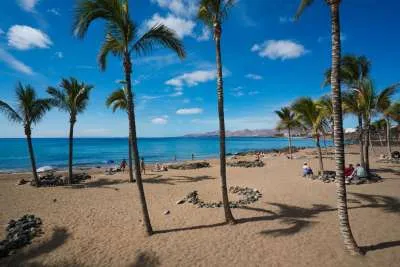
Five public officials are under investigation over alleged environmental offences linked to sewage discharges at Playa Jardín in Tenerife. The case is being handled by Court of First Instance No. 2 in Puerto de la Cruz and follows a complaint filed by the Environmental Prosecutor’s Office in Santa Cruz de Tenerife.
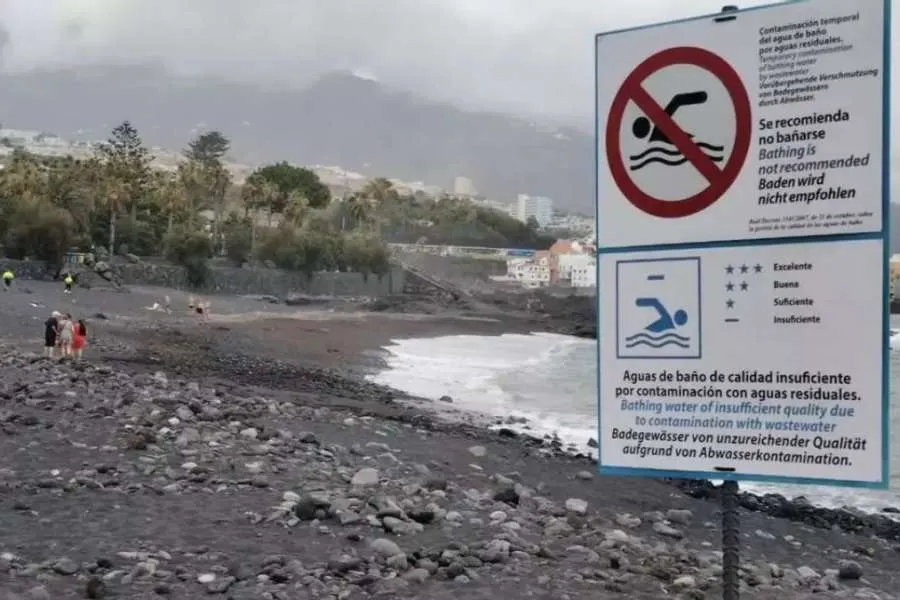
Bathing at the popular beach was discouraged for over a year due to high levels of faecal bacteria in the water, and only fully reopened and declared clear of contamination in the last couple of weeks.
Who is being investigated?
According to the High Court of Justice of the Canary Islands, those currently under investigation include:
- Marco Antonio González Mesa, former mayor of Puerto de la Cruz (PSOE)
- Alberto Cabo, councillor for Employment (Asamblea Ciudadana Portuense)
- Javier Davara, manager of the Island Water Council of Tenerife
- David Hernández, current councillor and deputy mayor
- Blanca Pérez, Island Councillor for the Natural Environment and vice-president of the Island Water Council (CC)
The investigation remains at the preliminary stage. In a court order issued on 6th February, the judge asked the public prosecutor to consider whether proceedings should be discontinued for any of those involved. One former island tourism councillor initially named in the complaint is not currently listed among those under investigation.
High bacteria levels in coastal water
On 21st June 2024, Public Health authorities warned of elevated levels of E. coli and enterococci in the water at Playa Jardín and recommended that people avoid swimming.
However, it was not until 3rd July that the local council formally advised against bathing. That restriction remained in place until June 2025, shortly before the San Juan celebrations.
During this period, bathers were frequently seen using the beach despite water samples recording E. coli levels of up to 1,000 colony-forming units per millilitre, far exceeding the 250 units required for an “excellent” rating and the 500 threshold for water considered “sufficient” or “good”.
The prosecutor’s complaint warns that exposure to high levels of faecal contamination increases the risk of waterborne illnesses, including respiratory infections, diarrhoea, vomiting and even meningitis.
Concerns over sewage infrastructure
The Environmental Prosecutor has highlighted what it describes as “significant deficiencies” in Puerto de la Cruz’s sewerage network, noting that many homes are not connected to the mains system.
Particular attention has been given to the wastewater treatment plant serving the Valle de La Orotava area and its underwater outlet pipe at Punta Brava. Prosecutors state there is no record of regular monitoring of the outfall structure under maximum load conditions, nor evidence that monthly samples were taken from the discharge point as required.
It is also alleged that for the past decade, flow data from discharged effluent was not submitted to the Canary Islands Government’s Vice-Ministry for the Environment, potentially breaching the conditions of its discharge authorisation.
Chlorine use raises further questions
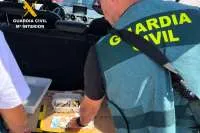
Samples taken by the Guardia Civil’s environmental protection unit (SEPRONA) reportedly indicated insufficient wastewater treatment. One sample was said to have a “strong smell of chlorine”.
To disinfect the effluent, chemical agents including caustic soda and sodium hypochlorite were used. Official documents show that the maintenance company requested a contract modification in 2023, citing increased unforeseen costs linked to intensified treatment measures.
A decree signed in November 2023 acknowledged a crack in the submarine outfall pipe, stating that disinfection had been stepped up to mitigate its effects pending repair.
However, prosecutors have warned that using chlorine to treat wastewater carries risks, particularly if organic matter and suspended solids have not been properly removed first. While chlorine can eliminate bacteria and viruses, it may also react with organic material to form trihalomethanes and chloramines — substances considered harmful to human health and the marine environment.
The investigation remains ongoing.
Share: