
Court reopens criminal case against controversial Cuna del Alma project in Costa Adeje
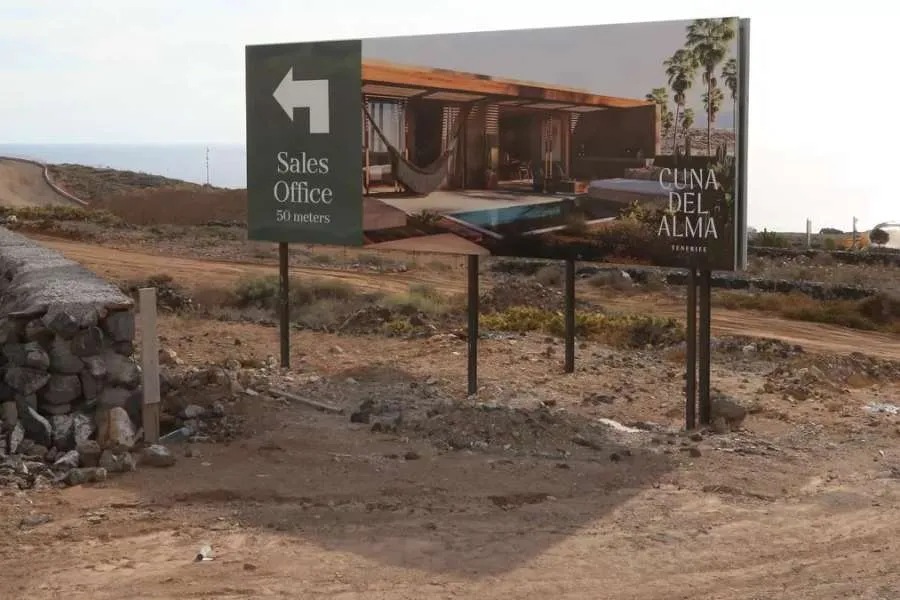
The criminal investigation into the controversial Cuna del Alma tourism development in El Puertito de Adeje, in the south of Tenerife, has been formally reopened after the courts upheld appeals from both the Public Prosecutor’s Office and the citizens’ group Asociación Cultural Social Ecologista Puertito Libre. The decision reverses the case’s closure issued just over a month ago.
The same judge from Court of First Instance No. 1 in Arona, Sandra Peraza, who had initially dismissed the case, has now ordered it to resume. She has demanded the full administrative file relating to the works being carried out by the developer within the coastal protection zone, as well as an independent expert report to assess whether the works comply with environmental and urban planning regulations.
Although the court has declined for now to impose a precautionary halt to the project, it has left the door open to doing so once the new investigations are completed. Cuna del Alma plans to build more than 3,600 tourist beds in one of the last undeveloped coastal areas in southern Tenerife.
The Public Prosecutor’s Office has also stated that, at this stage, it lacks the documentation necessary to support an immediate suspension, but that this position may change following the new investigative measures.
Coastal Protection Zone at the Centre of the Case
While the wider complaint alleges crimes including environmental damage, planning breaches, falsification of documents, and misconduct, the key issue that triggered the reopening is the developer’s works within the legally protected coastal strip. This section of the project represents only a small part of the total development area but is subject to particularly strict regulations.
The judge had previously accepted that the works had been authorised by the Canary Islands Directorate General for Coasts. The developer intends to build an open-air swimming pool, a restaurant, and a buggy car park within the protection zone as part of the future luxury development.
However, the Public Prosecutor argued in its appeal that the law governing the coastal protection strip allows only structures that, by their nature, cannot be located elsewhere, such as marine farming facilities or saltworks, or those that provide essential services linked to the public maritime-terrestrial domain. The Prosecutor noted that it is difficult to justify that a pool, restaurant, or buggy parking area meets such criteria, especially without seeing the full administrative file.
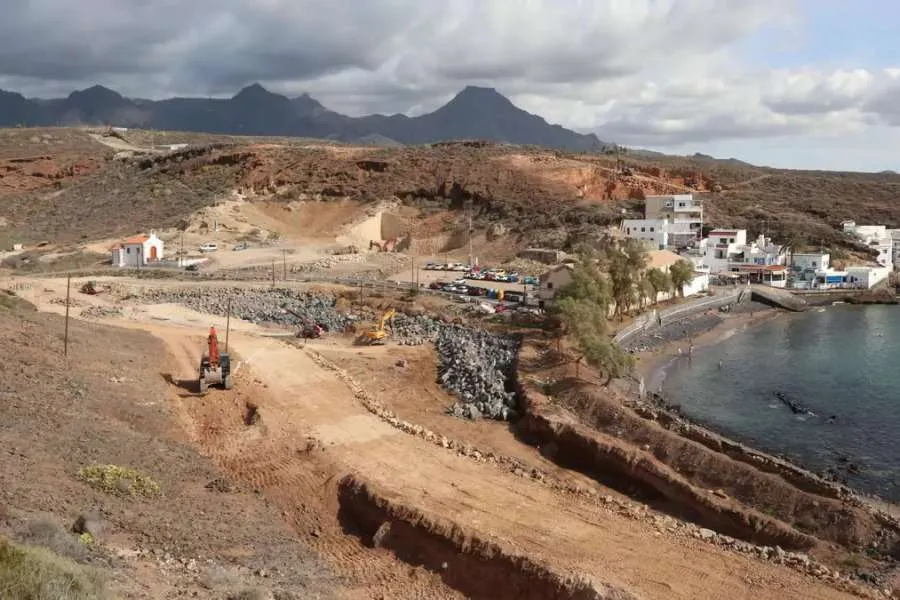
The current regional government, led by Coalición Canaria (CC) and the Partido Popular (PP), has supported the works, citing their value to tourism. Internal technical reports, however, indicate that the planned works do not comply with the restrictions applicable to the coastal protection zone.
According to the environmental group acting as the popular prosecution, the reopening of the case confirms that “there were more than enough reasons to investigate one of the most serious cases of environmental and urban planning corruption in Spain.”
Lack of Environmental Impact Documentation
The case file requested by the judge, includes an additional report from the Ministry for Ecological Transition (MITECO). The document warns of a lack of sufficient information to properly assess the environmental impact of the Cuna del Alma project.
The report highlights that directly in front of the planned development lies a protected Natura 2000 site, the Teno-Rasca Marine Strip Special Area of Conservation (ZEC). MITECO stresses that there is not enough data to determine whether the project could affect this sensitive marine environment.
In December 2024, the ministry requested additional studies covering both the works in the coastal protection strip and the project as a whole. The case file contains no record of any response to that request.
With the newly reopened investigation, the project enters a decisive phase that could determine whether the major tourism development in one of Tenerife’s last natural coastal enclaves can proceed as planned.
Share: