
Adeje approves New Traffic Law to crack down on Electric Scooters
Article update 30.04.2026 at 6:05pm:
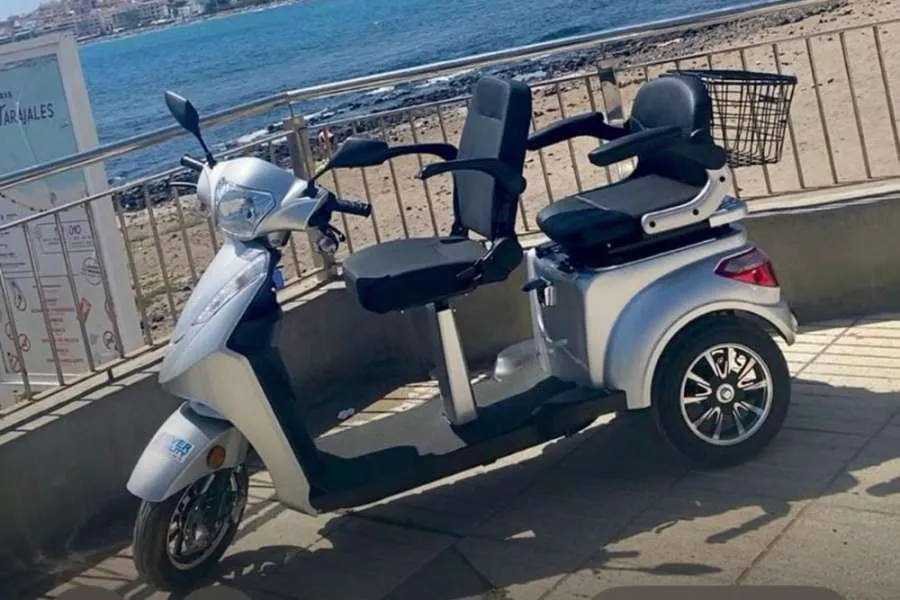
After several enquiries and comments on this article, we asked Adeje Town Hall if the new bylaw includes the two-seater sit on electric scooters, as it was defined as 'single user'. We like to say thankyou to their press office for finding out and clarifying the situation as follows... and YES it DOES include them:
Scooters with a seat for two people are also subject to control under the new bylaw, even if they are not mentioned under that specific commercial name. The regulation applies to any vehicle or device suitable for use on municipal roads, regardless of its technical characteristics.
In this case, attention should focus on four main sections:
Article 1. Scope of application
This is the basis. It allows these scooters to be included within the scope of the bylaw, even if they are not explicitly referred to as “tourist scooters”.
Article 8. Limitations on circulation, stopping or parking
This is relevant because it allows justified restrictions to be established on certain roads or areas, particularly where there are reasons related to safety, coexistence or the protection of pedestrian use.
Article 10. Specific circulation obligations for personal mobility vehicles, cycles or bicycles
A key rule appears here, bicycles, cycles or personal mobility vehicles may not access pedestrian roads or areas, and their use must be for a single person, except for cycles or tandems originally designed for two people.
Article 27. Commercial use of personal mobility vehicles, bicycles, cycles or other equivalent vehicles
This is the key article if these scooters are rented out by shops or tourism businesses. The activity is subject to authorisation, technical conditions, availability of spaces, municipal control and possible revocation if requirements are not met.
Original article:
Adeje Town Hall has approved a new traffic and mobility bylaw aimed at improving road safety and regulating the growing use of electric scooters across the municipality.
The measure, backed by all political parties except Unidas Podemos, which abstained, will now go out to public consultation for one month before returning for final approval in May.
Alongside the new rules, the council will launch a public awareness campaign titled “Respeto sobre ruedas” (Respect on Wheels), initially focusing on educating residents and visitors about the safe use of electric scooters.
Councillor for Security and Mobility, Mercedes Vargas Delgado, described the bylaw as a “major shift” in how mobility is managed in Adeje.
“This is not just an update of existing rules,” she said. “It regulates mobility as a whole, adapting to national legislation, improving safety, and aligning with sustainability and accessibility goals.”
Clear rules for e-scooters
For the first time, the bylaw sets out detailed regulations for Personal Mobility Vehicles (PMVs), including electric scooters.
These vehicles are defined as single-user, electrically powered transport with speeds between 6 and 25 km/h. Under the new rules:
- Riding on pavements and pedestrian zones is strictly prohibited
- Users must dismount at pedestrian crossings
- Pedestrians always have priority in shared spaces
- A minimum age of 16 is required to use them on public roads
Additional safety measures include a ban on using mobile phones and any kind of ear pods or headphones while riding, and a requirement to wear reflective gear at night or in low visibility.

Parking and enforcement
Strict parking rules will also be introduced. Scooters must be left only in designated areas and must not block pavements or crossings. Locking them to street furniture or charging them in public spaces will be banned.
Failure to comply could result in fines or the vehicle being removed by the Local Police.
Rental companies face tighter controls
The bylaw also targets companies renting out scooters, requiring them to obtain permits and meet strict conditions. These include:
- Verifying users’ ability to ride safely
- Providing clear guidance on traffic rules
- Holding valid civil liability insurance
- Ensuring vehicles are traceable via geolocation
Operators must also provide designated parking solutions and comply with tax and Social Security obligations.
Focus on safety and shared space
According to the council, the new regulations aim to “balance the use of public space,” reduce accidents, and ensure safer coexistence between pedestrians, drivers, and new forms of transport.
The Respect on Wheels campaign will roll out alongside the bylaw to help ensure both residents and tourists understand the changes—particularly the importance of pedestrian priority and responsible riding.
Share: