
The Document That Speaks a Different Language: Finally, a simple way to understand it

We’ve all been there. An important document arrives, and it might as well be written in code. Maybe it’s a work contract from a new international client, a research paper you desperately need for a project, or a letter from a relative overseas. The information is crucial, but the language is a barrier.
For years, the options weren't great. You could stare at it and hope for the best. You could manually type chunks into a free online box, losing your place, your formatting, and your patience, or you could pay for an expensive service and wait. None of these solutions felt right for the modern world.
But the way we handle information has quietly changed. The barrier between you and the knowledge in that document doesn't have to be there anymore.
The Real Problem with Translating Documents
It’s not just about swapping one word for another. Anyone who has used a basic translator knows that the real issue is that a document is more than its words. It has a layout. It has tables, headers, and maybe a crucial diagram. A contract’s meaning can change if a paragraph is moved. A research paper’s credibility suffers if the charts are garbled.
This is especially true for the documents that end up being the most important. Think about it:
- A job offer from a company in another country. You need to understand every clause, not just the gist.
- A family history, written by a grandparent, is now a scanned PDF filled with memories. You want to read their actual story, not a broken, line-by-line mess.
- A user manual for essential equipment. Getting the translation wrong isn't just inconvenient; it could be unsafe.
The old tools treated your document like a chunk of text to be processed. They ignored the fact that it's a finished piece of work that needs to stay that way.
What "Good" Actually Looks Like
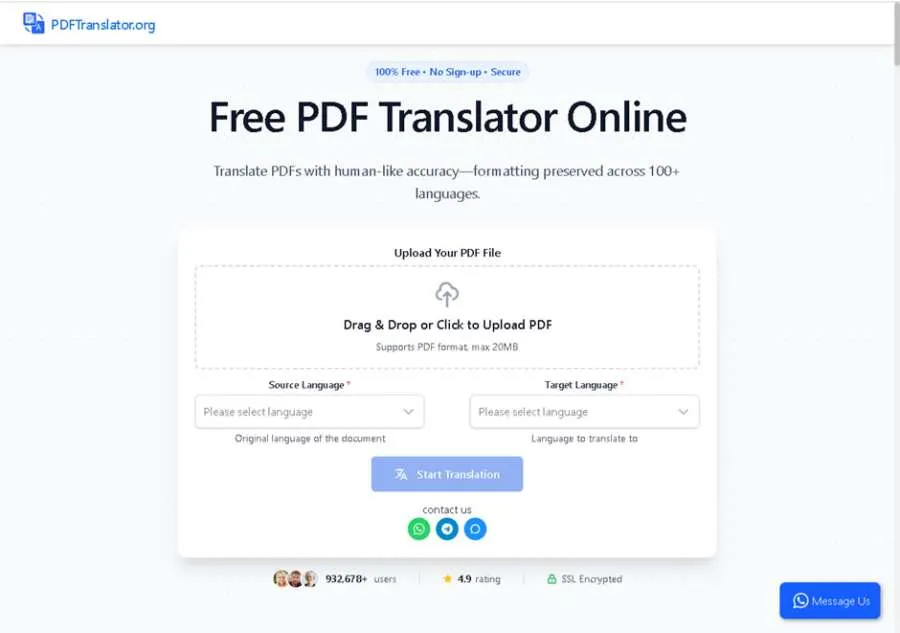
Imagine a tool that treats your document with respect. You upload a file, say, a contract written in Spanish. You tell it you need it in English. And then, in moments, you get back a file that looks exactly like the original. The same fonts, the same layout, the same tables. But now, every word is in English.
This isn't magic. It's what happens when you use a purpose-built translate pdf english to spanish tool that prioritises format preservation. The result is a document you can actually use immediately, without spending an hour reformatting it. It’s ready to print, sign, or share.
This becomes even more critical with older or physical documents. Maybe you only have a translate scanned pdf of an important lease or a historical family letter. Standard translators see only an image, not words. But a tool with built-in OCR (Optical Character Recognition) can "read" the text from that scan, translate it, and place the new text back into the original layout. It resurrects the document.
The Quiet Confidence of Knowing
There’s a specific feeling that comes with finally understanding something important. It’s the relief of signing a contract with full knowledge. It’s the joy of reading a relative’s story in your own language. It’s the satisfaction of completing a project because you can finally access that one research paper.
That feeling shouldn't come with a price tag or a sign-up hurdle. It shouldn't be reserved for people who can afford expensive services. The technology exists now to make it accessible to everyone.
More Than Words on a Page
At its core, translating a document is about connection. It’s about connecting a person to knowledge, an employee to an opportunity, a family to its history. The best tools are the ones that get out of the way and let that connection happen.
They preserve the integrity of the original because the format is part of the meaning. They handle the complexity of scanned images because the past deserves to be understood. They stay free and private because building a barrier to understanding helps no one.
The next time you're faced with a document in a language you don't speak, remember that the solution isn't to struggle or settle. It's to find a tool that works as hard as you do one that hands you back a perfect, readable, usable file, and lets you get on with what really matters.
Share: