
Sea levels around the Canary Islands have risen 10cm in 30 years
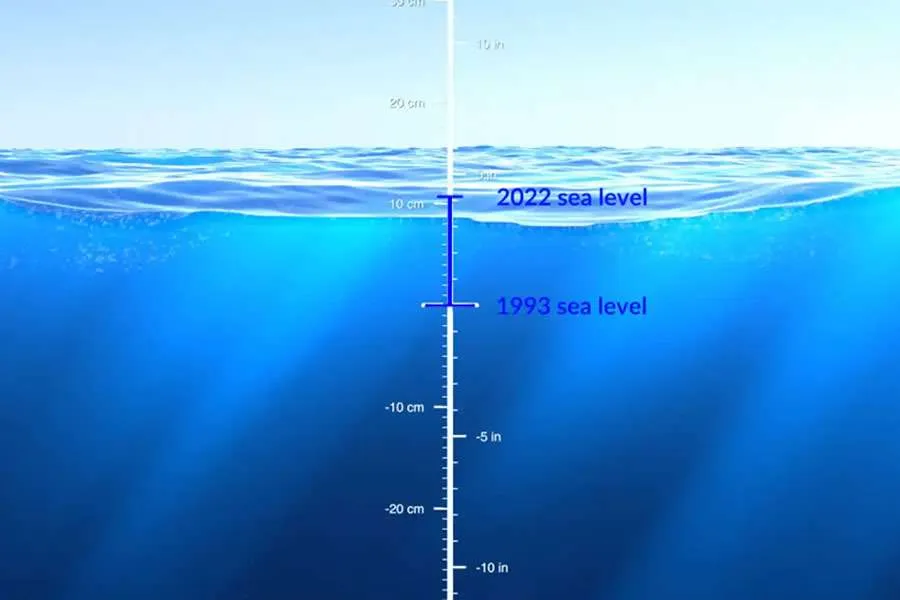
A new scientific study has confirmed that sea levels around the Canary Islands have risen by around 10 centimetres over the past three decades, highlighting the growing impact of climate change on the Archipelago. The findings come from an in-depth analysis by the Institute of Oceanography and Global Change (IOCAG) at the University of Las Palmas de Gran Canaria (ULPGC), based on satellite and tide-gauge data recorded between January 1993 and December 2022.
Published in the Journal of Marine Science and Engineering, the research estimates that sea levels in the region are rising at an average rate of 3.5 millimetres per year. Led by researchers Mikel Ibeas del Olmo and Antonio Martínez Marrero, the study aims to better understand long-term changes to the Canary coastline as global ocean temperatures increase.
Using long, consistent time series, the scientific team has produced a clear picture of how local sea levels have evolved, offering essential information for future coastal infrastructure planning and the islands’ broader blue economy.
One of the study’s key findings is that sea-level rise is not uniform across the Archipelago. Local ocean circulation patterns play a significant role. Oceanic eddies, described as the marine equivalent of atmospheric low and high-pressure systems, disrupt sea-level behaviour in areas where they occur.
Cyclonic eddies tend to lower the sea surface, resulting in a smaller rise than average, while anticyclonic eddies cause higher-than-average increases. This spatial variability complicates coastal-risk assessments across the islands.
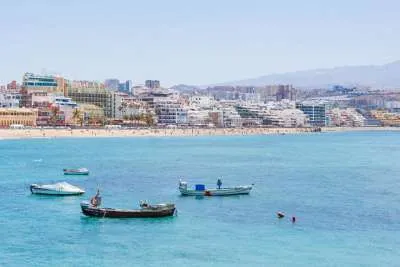
The researchers also identified a worrying trend for the two Canary capitals: both Santa Cruz de Tenerife and Las Palmas de Gran Canaria are experiencing slight land subsidence. This geological sinking makes relative sea-level rise more pronounced, adding 0.5 to 0.7 millimetres per year on top of increases driven by ocean warming.
Predictions for 2050
Looking ahead to 2050, the IOCAG team evaluated projections based on three UN Intergovernmental Panel on Climate Change (IPCC) scenarios. Under the most pessimistic scenario, sea levels could rise by around 40 centimetres in Santa Cruz de Tenerife and 36 centimetres in Las Palmas de Gran Canaria compared with 2005 averages. Such increases pose serious challenges for urban development, port infrastructure, and long-term coastal-risk management.
The study emphasises the urgent need to integrate scientific data into territorial planning. Rising sea levels threaten to cause significant environmental and economic damage, including coastal flooding, shoreline erosion, and saltwater intrusion into aquifers, which are crucial for the islands’ water supply.
Further risks include ecosystem loss and increased vulnerability of coastal infrastructure and essential services.
Researchers stress that forward-looking mitigation and adaptation strategies are essential to protect the Canary Islands as climate impacts continue to accelerate.
Share: