
Air Traffic Controllers explain why strong winds are making landings in the Canary Islands difficult
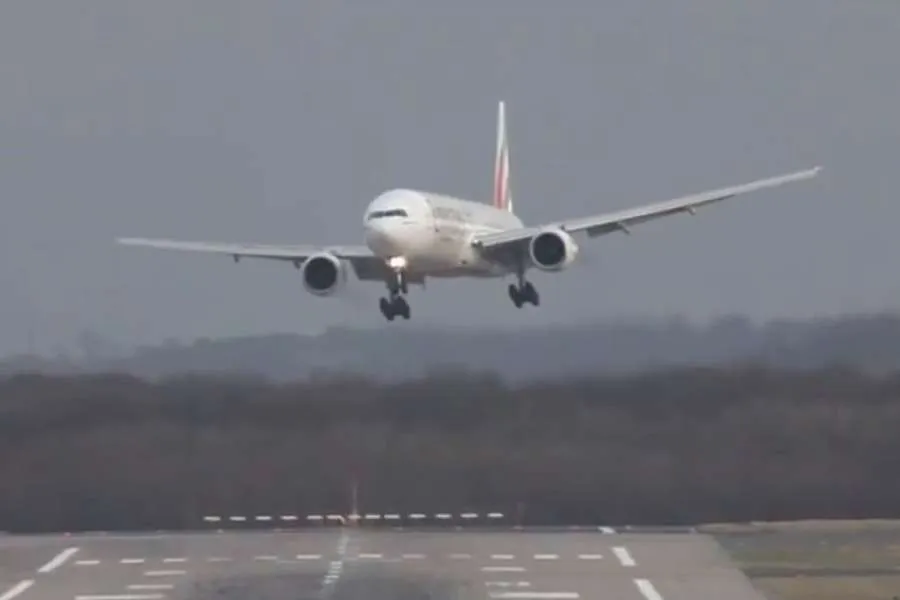
Strong winds from Storm Therese caused several aircraft to abort landings at Gran Canaria Airport yesterday, Friday, as dangerous conditions and high-speed winds continued to disrupt air travel across the Canary Islands.
Air traffic controllers confirmed that multiple flights were forced into “go-arounds”, a standard safety manoeuvre, due to strong gusts and wind shear during final approach.
Why Planes Suddenly Climb Again
Controllers explained that sudden changes in wind speed and direction during descent are considered critical. Aircraft approaching the runway are flying at a relatively low and stable speed, and wind shear can quickly upset that balance.
In some cases, a sudden loss of headwind or a shift to tailwind reduces the airflow over the wings, causing a sharp drop in lift. In others, strong crosswinds can push the aircraft off alignment with the runway at the last moment.
Both scenarios make a safe landing impossible, forcing pilots to immediately apply full power and climb away.
They stressed that while the sudden surge in engine power and steep climb can feel alarming for passengers, it is “the safest procedure when a landing is deemed not to be 100% safe”.
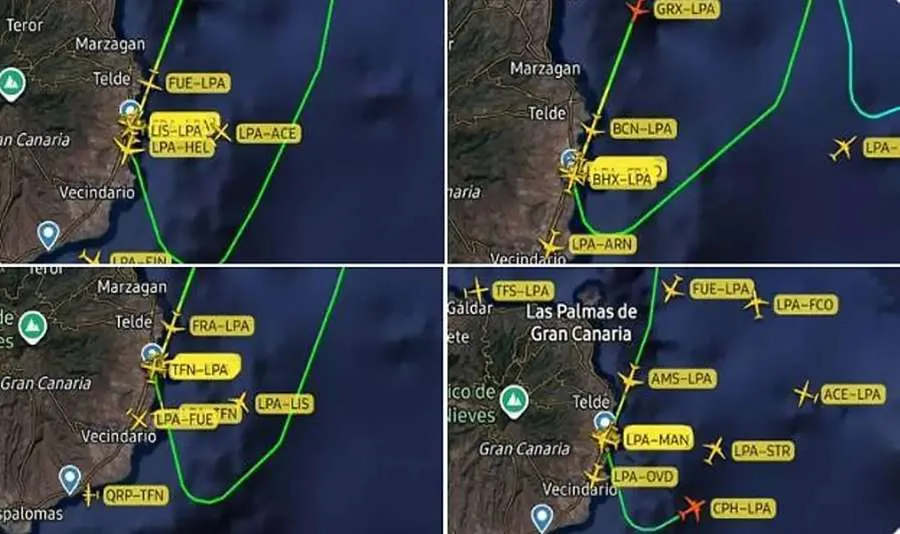
Images showing some of the flights that had aborted landings yesterday (Source: FlightRadar)
Flights Hit by Extreme Conditions
The disruption comes as the storm continues to impact flights across the islands, with dozens of cancellations and diversions already recorded.
Despite the difficulties, aviation authorities emphasise that safety margins remain high and crews are well trained to handle such situations.
‘Remarkable Speeds’ Recorded in the Skies
Interestingly, the same weather system has also led to unusually high ground speeds for some flights departing the Canary Islands towards northern Europe.
Strong tailwinds have pushed some aircraft to speeds exceeding 1,100 km/h. While this may sound dramatic, experts say it poses no risk.
Aircraft are simply travelling within a fast-moving air mass, and these speeds are still below the speed of sound (1,240km/h), with no impact on structural safety.
Share: