
Groundbreaking study identifies Iberian Orca dialect for the first time
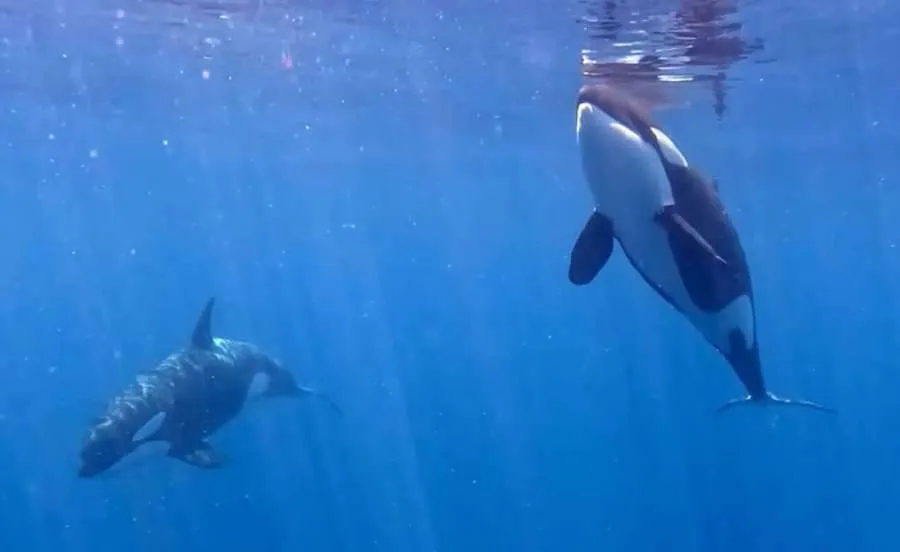
The Loro Parque Fundación is leading a pioneering scientific project that has, for the first time, formally described elements of the acoustic dialect of the Iberian orca, one of the most endangered whale populations on the planet.
The study, recently accepted for publication in the Journal of Marine Science and Engineering, represents a major step forward for marine conservation. It is the result of more than 20 years of scientific collaboration between Loro Parque Fundación, the marine conservation organisation CIRCE, and the University of La Laguna (ULL).
The Iberian orca population is classified as Critically Endangered by the International Union for Conservation of Nature (IUCN). Researchers believe fewer than 40 of them are left.
The project is led by Dr Javier Almunia of the University of La Laguna, working alongside scientists from Loro Parque Fundación and CIRCE. According to Dr Almunia, the findings open up new opportunities to better understand how these orcas communicate, behave and organise themselves socially.
“For the first time, we have been able to describe some of the sounds that form part of the vocal repertoire of the Iberian orca,” he explained. “These previously unknown sounds will help us understand how they communicate and interact, which is essential if we are to protect them.”
Advanced technology and long-term research
The research is based on cutting-edge acoustic monitoring techniques developed through decades of work with the orcas living at Loro Parque, in collaboration with the University of La Laguna.
A broadband acoustic buoy, initially tested in Tenerife, was deployed in May 2025 near Barbate, on the Andalusian coast. The device recorded clear vocalisations from Iberian orcas, allowing scientists to identify four distinct classes of sounds, the first ever formally described for this population.
The buoy also detected 40 Hz feeding calls from fin whales, never before recorded in the Strait of Gibraltar, as well as sperm whale clicks and dolphin whistles. These recordings highlight the exceptional marine biodiversity of the area.
However, the study also revealed a constant layer of human-made underwater noise, mainly from boats and echo sounders. Researchers warn that this persistent noise forces cetaceans to communicate in an increasingly saturated acoustic environment, which could pose a serious threat to their survival in busy shipping corridors such as the Strait of Gibraltar.
Call for permanent acoustic monitoring
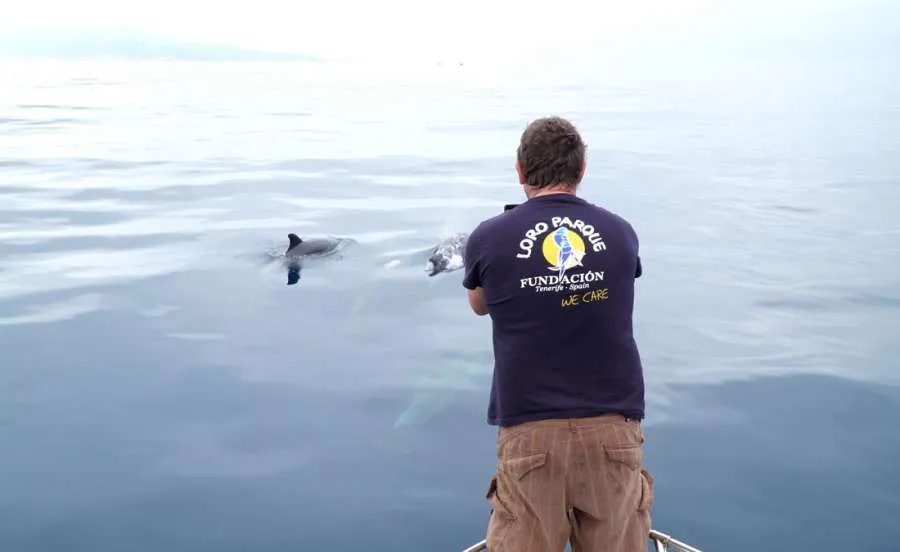
One of the key conclusions of the study is the importance of next-generation passive acoustic monitoring (PAM). These systems allow continuous, non-invasive observation of marine animals in complex environments, providing vital data on communication, feeding behaviour, movements and responses to human pressures such as shipping traffic and underwater noise.
Renaud de Stephanis, co-author of the study and director of CIRCE, said the results strongly support the creation of a permanent acoustic monitoring observatory in the Strait of Gibraltar.
“This is one of the busiest maritime corridors in the world,” he said. “A permanent monitoring network would allow real-time detection of endangered species, improve our understanding of how they use their habitat, identify threats such as noise, ship strikes or fishing activity, and help design more effective conservation measures.”
A vulnerable population
The research further reinforces the international impact of the work carried out by Loro Parque Fundación over more than 30 years, combining advanced scientific research, long-term collaborations and sustained funding for marine conservation projects.
It also underlines the importance of integrating data collected in zoological institutions such as Loro Parque, where detailed and controlled studies are possible, with observations made in the wild. Scientists stress that only by combining both approaches can a complete picture be formed of the behaviour, communication and conservation needs of the Iberian orca population.
Share: