
Why Industrial Workwear and PPE are the backbone of a safe business
The regulatory compliance standard sets a minimum that all industrial businesses should meet. The companies with the best safety records and the most competent workforces know that this minimum is just the beginning.
An integrated solution for industrial workwear and PPE, including all layers from rigger boots to outerwear, is the most direct investment a business can make in both the individuals who do the work and the long-term health of the organisation that relies on them.
The Full-Body Protection Principle
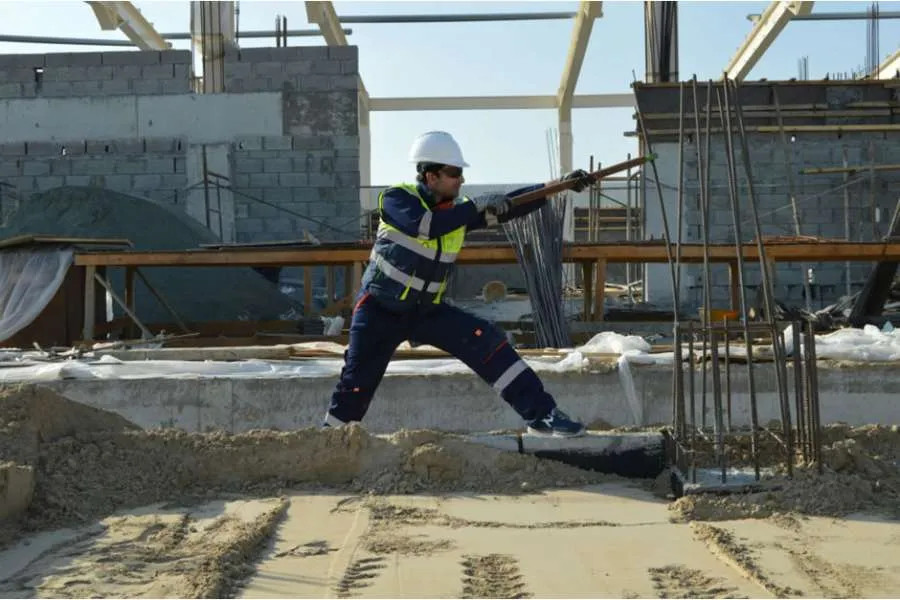
Industrial hazards do not have limits. An employee in a construction site is at risk of falling objects injuring their feet, sharp objects injuring their lower legs, cold and wet weather injuring their torso, abrasions injuring their hands, airborne particles injuring their eyes and lungs.
A safety programme is not a protection strategy that deals with a few of these risks and leaves the rest unaddressed. It is an incomplete measure with foreseeable gaps. The principle of full-body protection treats the worker as a complete physical system that must be fully covered, rather than as a set of individually evaluated body parts.
Footwear as the Foundation of Physical Safety
Foot and ankle injuries are among the most common and most debilitating in industrial settings. Quality rigger boots provide impact protection, penetration resistance, ankle support, and slip-resistant soles that collectively address the multiple hazard types a worker encounters at ground level.
The investment in proper safety footwear pays back through reduced injury rates, lower absenteeism, and the maintenance of physical capability that keeps experienced workers productive across long careers. A worker whose feet and ankles are compromised by inadequate footwear carries that limitation into every subsequent working day.
Outerwear and the Sustained Exposure Problem
One of the most debilitating and common injuries in the industrial setting is the foot and ankle. Good rigger boots offer protection against impact and penetration, support for the ankle, and non-slip soles; all these features help mitigate the various hazards a worker may encounter when working at ground level.
Investing in good safety shoes pays off by reducing injury rates, decreasing absenteeism, and maintaining the physical capacity that keeps older workers productive throughout their long working lives. An employee whose feet and ankles are impaired by poorly fitting shoes carries that burden on every working day thereafter.
Hand Protection and Task-Specific Requirements
The most common tools of the majority of industrial workers, and also the most injured body parts in work-related accidents, are hands. The variety of hand hazards associated with various industrial operations, such as chemical exposures, cutting risks, and vibration, implies that no single type of gloves can be sufficient to meet all needs.
A programme, where the specifications of the gloves are matched to the type of task, instead of using one style in all tasks, offers superior protection and generally greater acceptance of the workers, as gloves used to suit the particular demands of a task are less likely to impair the dexterity that the task demands.
Eye and Face Protection in High-Risk Environments
In industrial environments, eye injuries can largely be avoided by following proper specifications and consistently using the correct protective equipment. Comfort and fit are the most frequent barriers to regular use, and not worker attitude. Reliable safety eyewear is well-fitted, free of fogging, and free of pressure points over an entire working day.
Eyewear that does not meet any of these criteria is eliminated as soon as possible, i.e., the hazard that eyewear was created to guard against is at its greatest risk. Specification quality is the motivator of compliance in this category, as in any other.
Chemical and Particulate Exposure Management
Workplaces involving chemicals or airborne particulates employ workers who need respiratory and skin protection relevant to the chemicals or particulates involved. The generic methods of chemical protection are dangerous, either with or without specification, resulting in needless expenses and inconvenience or under-specification, which is a real health hazard.
When the correct hazard assessment is performed, and the corresponding protection is chosen, the correct results are obtained, and it is necessary to know the hazard and the real capabilities of the protective equipment.
The Financial Case for Comprehensive Protection
Workplace injuries are much more costly than medical or compensation outcomes. The lost working days, diminished productivity in the recovery periods, the retraining cost of replacing injured employees, the insurance factors, and the time spent in the management of investigating and reporting the incident all add up to a total cost that is always higher than the prevention investment. The economic argument for wholesome workwear and PPE is not merely regulatory. This is a simple cost-benefit analysis that, in all practical situations, prevention is better than cure.
Culture, Compliance, and the Leadership Signal
The success of any workwear and PPE programme is always based on the culture that surrounds it. The equipment that the workers believe in, that the management uses and promotes, and that they consider a l priority, but not a requirement of the administration, results in the lack of compliance that can never be achieved by enforcement.
This culture is created by beginning with purchasing choices that demonstrate sincerity, proceeding with training that clarifies the rationale behind each safety need, and being upheld by leadership behaviour that treats safety as a value, not a variable.
Share: