
553km undersea cable completed linking three Canary Islands
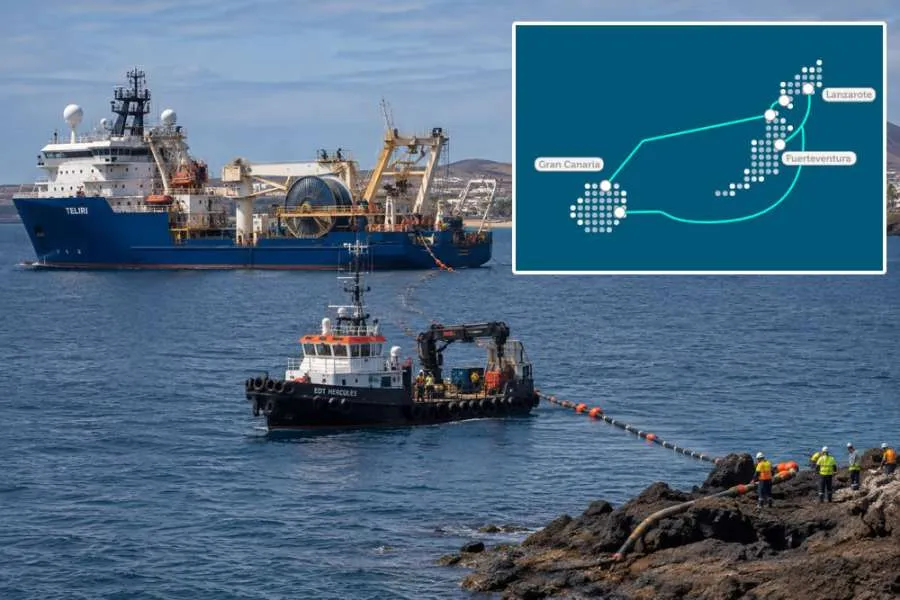
A major new underwater communications network linking three of the Canary Islands has reached an important milestone after 553 kilometres of cable were laid beneath the Atlantic.
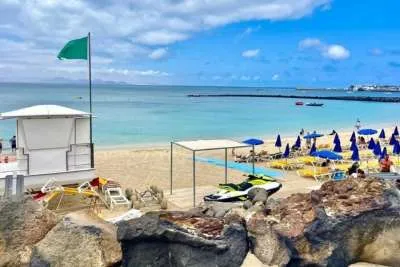
Canalink has completed the deep-water marine deployment for its Atlántica project, with the final planned landing operation taking place at Playa Blanca in Lanzarote.
The new network will link Gran Canaria, Fuerteventura and Lanzarote using two separate routes, providing additional communications capacity while making the islands less dependent on individual connections.
The eastern route connects Ojos de Garza in Gran Canaria with Puerto del Rosario in Fuerteventura and Playa Honda in Lanzarote.
A separate western route links Barranco de Tenoya in Gran Canaria with Corralejo in Fuerteventura and Playa Blanca in Lanzarote.
Having independent routes is an important part of the project because it provides an alternative path for communications if there is a fault or interruption affecting one section of the network.
The submarine cable ship Teliri has now completed the work assigned to it, but that does not mean the entire network is ready to enter service immediately.
Attention will now turn to completing the infrastructure on land.
Outstanding work includes connections at Ojos de Garza, Tinoca and Corralejo, two drilling operations in Gran Canaria and Fuerteventura, underground ducts and modifications to the telecommunications stations serving the project's seven landing points.
Once those stages are finished, the submarine infrastructure can be connected to the terrestrial network.
Atlántica represents an investment of €34 million, with €23 million financed by the European Union through its CEF Digital programme.
The system also incorporates a previously completed connection at Costa Calma in Fuerteventura, providing another connection point for the island.
For residents and businesses, the significance of the project goes beyond faster communications. Modern island economies depend heavily on reliable digital connections for banking, tourism, healthcare, public services and everyday internet and mobile use.
Submarine cables carry enormous quantities of data between islands and continents, meaning additional routes can provide valuable resilience when faults occur.
The completion of the 553-kilometre marine deployment therefore marks a major stage in the project, although further work on land is still required before the new network can become fully operational.
Share: