
Discoveries near Papagayo beaches reveal more of Lanzarote’s earliest European settlements
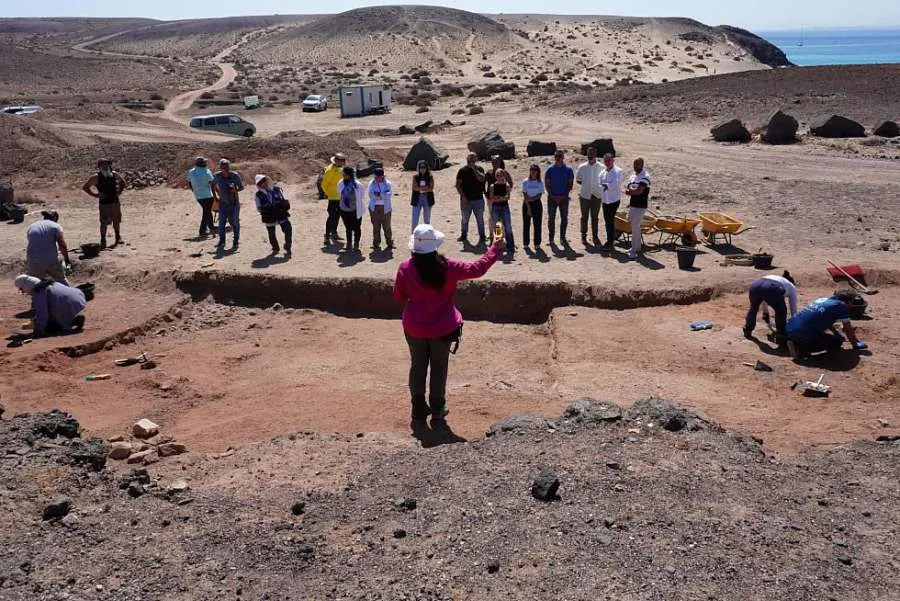
Archaeologists have uncovered two previously unknown wells and other remains near Lanzarote’s Papagayo beaches, offering fresh clues to how people lived in the Canary Islands’ first permanent European settlement.
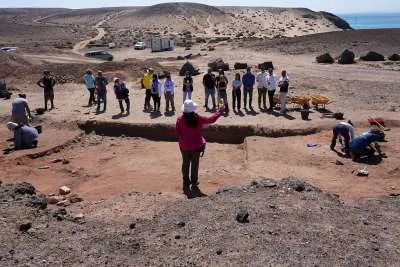
The discoveries were made at San Marcial de Rubicón, in Yaiza, where researchers have completed their seventh excavation campaign.
After a month of fieldwork, the team has identified two wells, a third structure associated with water, a lime store and an area of compacted-earth flooring.
The findings, announced on Thursday (22nd October), are helping archaeologists piece together the layout and everyday life of the 15th-century settlement.
Finding water in a dry landscape
A major part of this year’s work focused on the Barranco de Los Pozos, where historical documents and local accounts suggested that more water structures remained buried.
The discovery of the two wells adds to the evidence of how the settlement’s inhabitants obtained water in an environment where supplies were scarce.
Rather than reopening areas already investigated, the team concentrated on new ground. Underground radar surveys helped identify promising locations for excavation.
Elsewhere, researchers found a lime store connected with a kiln uncovered during an earlier campaign.
They also investigated an area with compacted-earth floors that may have formed a square providing access to the church. That interpretation remains under study.
A historic site beside familiar beaches
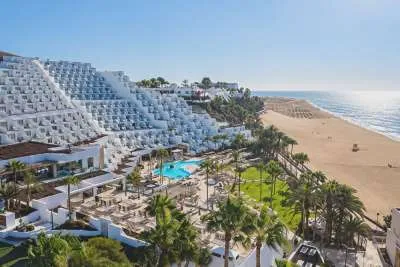
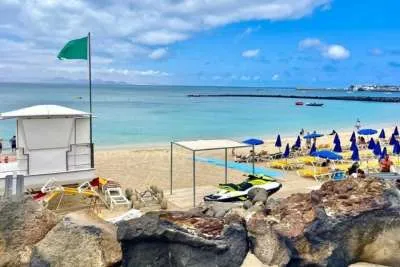
The discoveries reveal another side of a coastline now better known to visitors for Papagayo’s beaches.
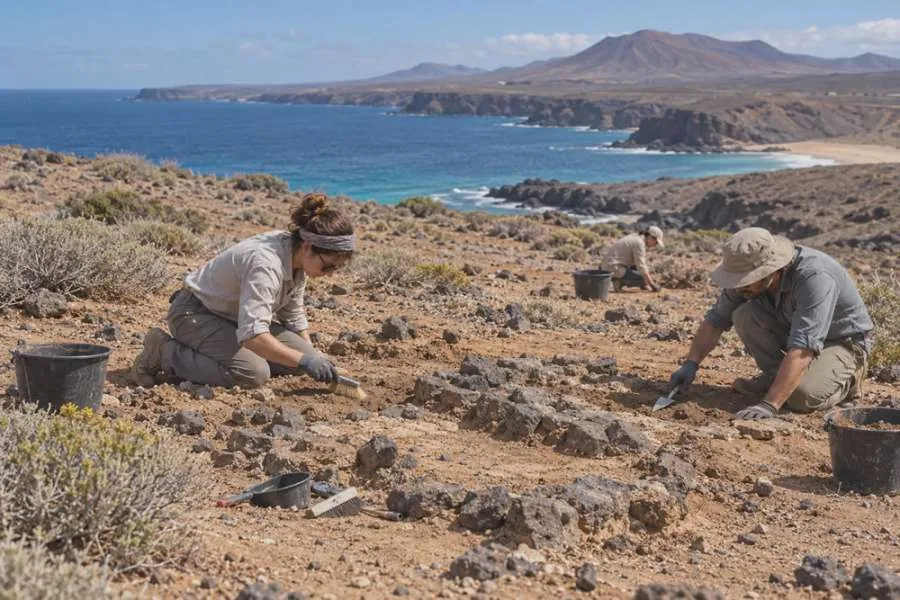
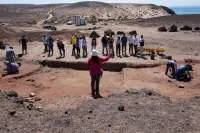
Sample image of archaeologists working in the area.
San Marcial de Rubicón was established following Jean de Béthencourt’s arrival in Lanzarote in 1402, during the opening stages of the European conquest of the Canary Islands.
The latest excavations have also recovered pottery, coins, clothing pins, shells and human and animal bones, providing material for further investigation.
With fieldwork complete, attention now turns to laboratory analysis. Finds will be taken to the Canary Islands’ public universities for detailed examination to help establish what the newly uncovered structures were used for.
The project brings together the Canary Islands Government, Yaiza Council, the University of La Laguna and the University of Las Palmas de Gran Canaria.
Share: