
Why traffic chaos in Tenerife isn't really about tourist numbers
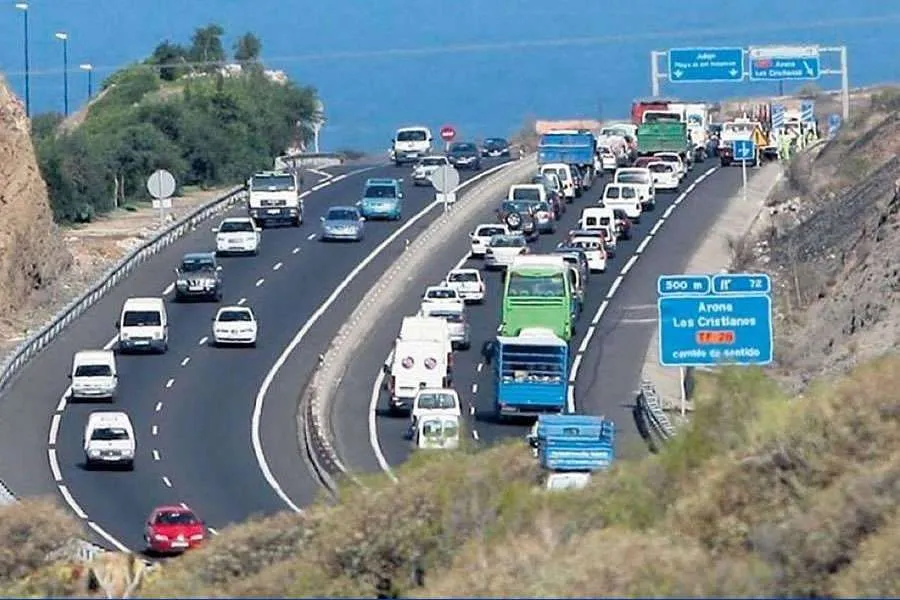
Anyone who has sat motionless on the TF-1 during rush hour has probably blamed the nearest tour bus. It's an easy assumption. More visitors, more hire cars, more congestion. But look closer at when and where the worst jams actually happen, and a different picture emerges.
The real bottlenecks in Tenerife tend to cluster around commuter hours rather than tourist check-in times, pointing to something structural rather than seasonal.
Tourist Numbers Rise While Roads Stay Static
Visitor numbers to the Canary Islands have climbed steadily in recent years, with airport arrivals data compiled through national aviation statistics showing sustained passenger growth across Tenerife's two airports. It's tempting to draw a straight line between those figures and the daily gridlock on the island's main arteries.
Yet the road network itself has barely expanded to match. The TF-1 and TF-5 motorways, Tenerife's two principal corridors, were largely designed decades ago for a very different population and traffic pattern. Widening projects have been discussed for years, but progress has been slow, leaving the same lanes to absorb a growing volume of daily journeys.
Local Commuters Bear the Brunt of Delays
Talk to anyone who drives between Santa Cruz and the south of the island for work, and the story shifts away from tourism entirely. Peak congestion tends to hit hardest between 7:00am and 9:00am, then again from 5:00pm to 7:00pm, precisely when residents are heading to or from jobs, not when coaches are moving guests between resorts.
This commuter-driven pattern suggests the island's traffic problem is fundamentally about how residents move around, not how many visitors arrive. Changing daily routines have also reshaped how people spend spare moments during delays and quieter evenings at home. Podcast platforms fill commute time without requiring a screen. Audiobook services accompany slow-moving traffic without adding distraction. Digital entertainment has shifted in the same direction — UK casinos without verification with instant access and no registration barrier fit naturally into the spare pockets of time that commuter life creates. It's a small but telling example of how digital convenience has crept into everyday downtime.
How Residents Adapt Their Evening Routines
Faced with predictable delays, many residents have simply restructured their days. Staggered start times, earlier school drop-offs by parents commuting onward to work, and a rise in car-sharing arrangements have all become more common responses to congestion. Local employers in Santa Cruz and La Laguna have also reported shifting flexible working arrangements to reduce overlap with peak traffic windows.
Regional population data from the Canary Islands statistics institute shows that the resident population has grown steadily too, adding further pressure to a network that hasn't scaled proportionally. Combined with limited public transport frequency on some routes, many households still see private vehicles as the only reliable option, reinforcing the very congestion they're trying to avoid.
Officials Weigh New Infrastructure Investments
Regional authorities have acknowledged the mismatch between road capacity and demand. Discussions around expanding tram lines, improving bus rapid transit corridors, and finally advancing long-delayed motorway widening projects have gained renewed attention, as Canarian Weekly reports on the race against time to complete the TF-1 third lane.
Whether these plans translate into faster construction timelines remains to be seen. For now, the evidence points away from tourism as the primary culprit and toward a simpler explanation: infrastructure that hasn't kept pace with how residents actually live, work and travel each day. Until that gap closes, the daily crawl along Tenerife's motorways is likely to remain a fixture of island life, tourist season or not.
Share: