
Canarian government takes power away from local councils to prevent another ‘Cuna del Alma’ scenario
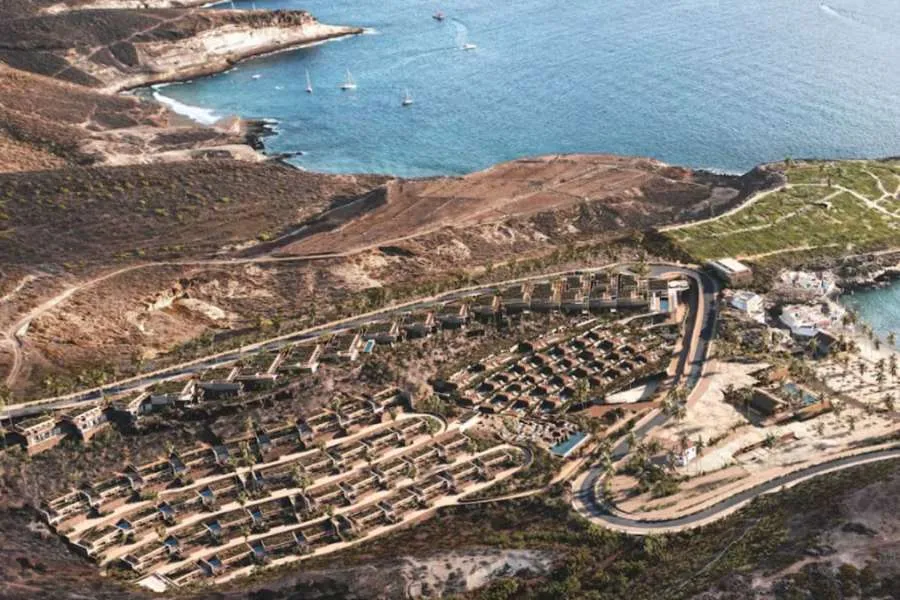
The Canary Islands Government has introduced a key change to its draft Biodiversity Law aimed at preventing local councils from bypassing environmental protections, a move widely seen as a direct response to the controversial Cuna del Alma project in Costa Adeje in the south of Tenerife.
According to reports in the Spanish press, the regional executive has amended the preliminary legislation so that only the Canary Islands Government or Parliament — not town halls — can declare a development project to be of “overriding public interest”.
Centralising Environmental Authority
The reform forms part of the new Biodiversity Law being fast-tracked by the Ministry of Ecological Transition. Under the proposed framework, local councils would no longer have the authority to independently justify projects on public interest grounds if this involves relocating protected species or overriding environmental safeguards.
Regional minister Mariano Zapata has defended the reform, stating that it will strengthen protection of the islands’ natural heritage through a clearer and more comprehensive legal structure.
The ‘Cuna del Alma’ Case
The change comes after the Adeje Town Hall used this legal mechanism in 2024 to revive construction of the controversial Cuna del Alma development in southern Tenerife.
The Adeje Council declared the project to be of “first-order public interest”, citing a housing emergency. That classification allowed the relocation of a protected plant species — the so-called “viborina triste” — and effectively enabled works to continue.
The development covers around 400,000 square metres and includes restaurants, a spa, a semi-private beach, and 420 high-end apartments and luxury villas, with prices reportedly reaching up to €2.3 million.
Adeje Council argued that land ceded by the developers would help facilitate social housing, a justification that allowed it to position itself as the competent authority to approve the relocation of protected flora.

A Shift in Power
The new legislative proposal seeks to ensure that decisions affecting vulnerable species and protected habitats cannot be made solely at municipal level.
If approved, the change would centralise this authority at regional level, preventing councils from unilaterally classifying large-scale developments as being of overriding public interest.
The reform marks a significant shift in the balance of environmental decision-making in the Canary Islands — and signals the regional government’s intention to avoid similar legal disputes in future large-scale tourism projects.
Share: