
Disputes over development on protected mountain in south Tenerife reaches EU Commission
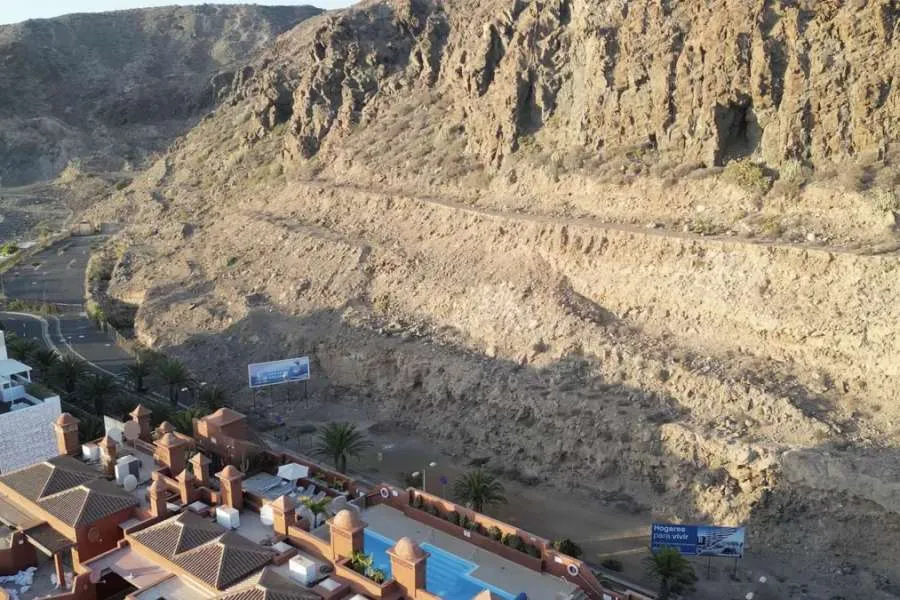
A growing dispute over two proposed developments on one of Tenerife south’s protected natural landmarks has now reached the European Commission, after environmental groups formally complained about planned construction projects on the slopes of Montaña de Guaza in Palm Mar.
Ecologists are calling for an immediate halt to all licence procedures linked to the developments, warning they could cause “irreversible impacts” to endangered species and protected habitats within a European Natura 2000 conservation area.
Luxury developments planned near protected coastline
One of the projects involves Spanish developer Metrovacesa, which plans to build a residential complex featuring 28 homes, commercial units, garages, storage rooms and a communal swimming pool.
The second development, known as “The Cliff”, has been proposed by developer Lemwey, linked to the Belgian business group Los Menceyes, and would create a luxury urbanisation between Palm-Mar beach and Montaña de Guaza.
According to documents cited in the complaint, the Metrovacesa project would occupy around 3,200 square metres close to the coastline.
Environmental groups argue that neither project has undergone the full environmental impact assessments required for developments affecting Natura 2000 protected land.
Fears over endangered species
The formal complaint submitted to the European Commission also highlights concerns over several endangered and endemic species believed to inhabit the area.
Among those mentioned are:
- The Tenerife coastal darkling beetle (Pimelia canariensis)
- The critically endangered Tenerife giant lizard (Gallotia intermedia)
- Cory’s shearwater nesting sites
- Trumpeter finches
- Stone-curlews
Environmental reports attached to the complaint warn that construction noise, vibrations, lighting and increased human activity could severely disrupt wildlife populations and damage fragile habitats.
Campaigners also argue that planned slope stabilisation works involving concrete, metal mesh and retaining structures could permanently alter the mountain’s natural landscape, hydrology and geological stability.
Legal battle continues
The dispute has already triggered a legal battle between developers and the local council.
Ayuntamiento de Arona maintains that environmental assessments are required before granting planning permission due to the site’s protected status under European environmental law.
However, Metrovacesa challenged that position in court, and in December the Tribunal Superior de Justicia de Canarias ruled in favour of the developer, stating that an environmental assessment was not necessary to obtain a licence.
Arona Town Hall has since appealed the ruling to Spain’s Supreme Court, arguing that clarification is needed to avoid weakening environmental protections in sensitive areas.
Environmental groups say authorising the developments without stricter safeguards would set a dangerous precedent for future construction inside protected natural spaces across the Canary Islands.
Share: