
3.9 magnitude earthquake felt between Gran Canaria and Fuerteventura
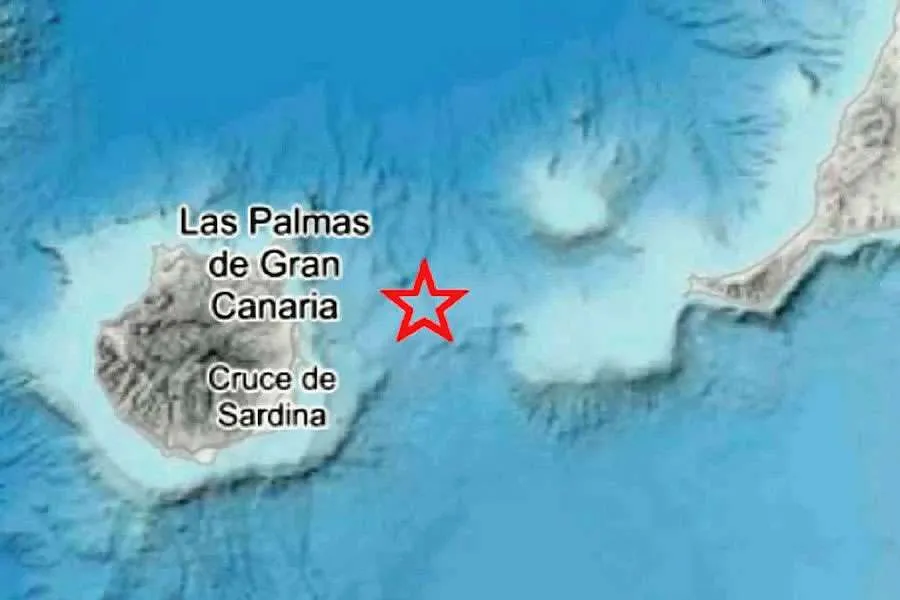
A 3.9 magnitude earthquake was recorded in the early hours of this morning (Tuesday) between Gran Canaria and Fuerteventura, with the tremor waking residents in several parts of both islands.
According to the National Geographic Institute (IGN), the earthquake struck at 2:31am in the Atlantic Ocean, in the maritime channel separating the two islands. The epicentre was located at a depth of 16 kilometres beneath the seabed.
Widely felt across Gran Canaria
The quake reached a maximum intensity of Level III on the European Macroseismic Scale, meaning it was weak but clearly noticeable indoors. The strongest reports came from eastern Gran Canaria, where residents in Ingenio, Agüimes and several neighbourhoods of Telde, reported feeling the tremor.
A slightly weaker intensity, between Levels II and III, was recorded in parts of Santa Brígida, including Bandama, Los Alvarados and Los Lentiscos, as well as in several districts of Las Palmas de Gran Canaria, including Tamaraceite, San Lorenzo, Tafira Baja, El Román and Jinámar.
The earthquake was also felt more lightly (Level II) in La Aldea de San Nicolás, Vega de San Mateo, Valsequillo and Cercados de Espino in San Bartolomé de Tirajana.
Tremor also felt in Fuerteventura
Although the epicentre was located offshore closer to the eastern coast of Gran Canaria, the seismic waves were also felt in parts of Fuerteventura.
The IGN received reports from Antigua, including Agua de Bueyes and Valles de Ortega, as well as Tiscamanita in Tuineje and Toto in the municipality of Pájara, where the tremor was recorded at Levels I to II, meaning it was only faintly perceptible.
No injuries or damage have been reported.
While the tremor was enough to wake many residents, earthquakes of this magnitude are not common, but not unusual in the Canary Islands. The IGN has repeatedly stressed that occasional tectonic earthquakes form part of the archipelago's normal geological activity and, on their own, are not an indication of increased volcanic activity.
Share: