
Fuel prices have risen by 25% in the Canary Islands this year and are still going up
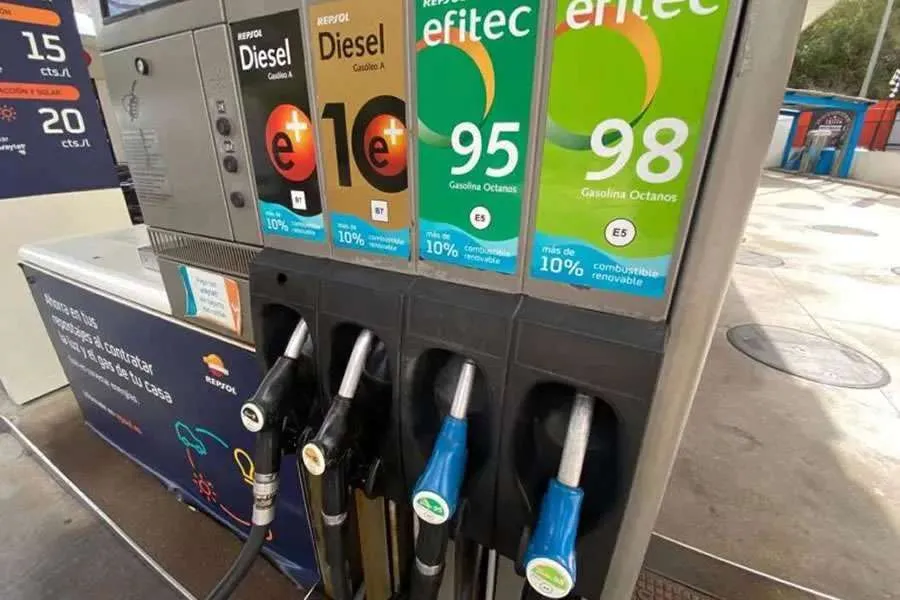
Drivers in the Canary Islands are paying significantly more to fill up their cars this summer, with fuel prices having risen by around 25% on average since the beginning of the year.
The cost of filling a typical 50-litre tank with 95-octane unleaded petrol has increased from around €58.50 in January to €72.40 now, a rise of almost €14, or 24%.
Diesel drivers have been hit even harder. A 50-litre tank that cost approximately €58.20 at the beginning of the year now costs €76.50, an increase of more than €18, or 31%.
The figures, updated to 12th August, come from the Spanish Government’s fuel price database.
Currently, the average price per litre in the Canary Islands is:
- 95 unleaded: €1.44 per litre
- 98 unleaded: €1.57 per litre
- Diesel: €1.53 per litre
This means filling a 50-litre tank with 98-octane petrol now costs around €78.90, approximately 21.5% more than at the start of the year.
Fuel prices rising faster in the Canaries than mainland Spain
Official inflation figures show that fuel prices in the Canary Islands are also rising considerably faster than the national average. This is particularly noticeable because fuel has traditionally been considerably cheaper here than in mainland Spain due to the islands’ different tax system.
Compared with July last year, fuel prices in the islands were 19.9% higher, compared with an average increase of 11% across Spain.
There was some relief during July, when fuel prices in the Canaries fell by 1.8% compared with June. However, nationally they increased by 5.6% during the same period.
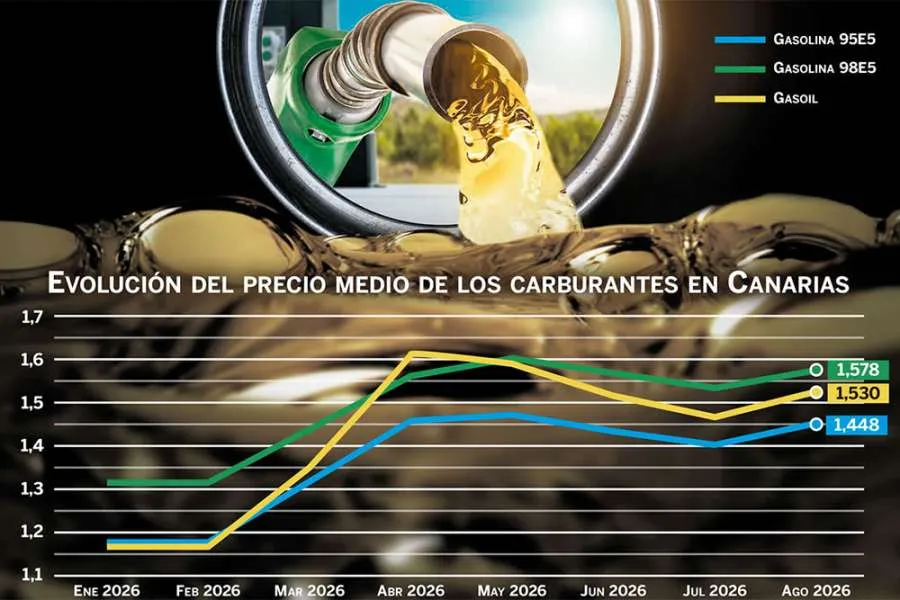
Fuel price trends in the Canary Islands during 2026. (Image: DA / Samuel García)
Government measures failing to offset increases
The Canary Islands Government has introduced measures intended to reduce the impact of higher fuel prices.
At the end of July, it extended several tax measures introduced in response to the crisis in the Middle East until 30th September.
These include a temporary 0% IGIC rate on fuel, which is estimated to reduce prices by around 10 cents per litre.
For somebody filling a 50-litre tank, that represents a saving of roughly €5. However, the saving has been more than wiped out by the overall increase in prices.
Additional support has also been extended for farmers and professional transport operators through increased partial refunds on fuel taxes.
Higher fuel prices pushing up the cost of living
The increase at the pumps is also contributing to wider inflation across the Canary Islands.
Transport costs have risen by 6.7% over the last year, helping push annual inflation in the islands to 3.4% in July. That is slightly below Spain’s national inflation rate of 3.6%.
There are also differences between the two Canary provinces. Annual inflation stood at 3.2% in Santa Cruz de Tenerife province, compared with 3.5% in Las Palmas province.
Restaurants and accommodation have become 5% more expensive over the last year, while several everyday food products have also recorded substantial increases.
Egg prices are up 10.6%, fresh and frozen fish by 6.9%, while beef, lamb and chicken have all increased by more than 6%.
There is better news for shoppers buying fresh produce, as fruit prices have fallen by 4.4%, while vegetables and pulses are down 5.7%.
Clothing and footwear prices also dropped sharply in July, by 13.7%, largely because of the summer sales.
Share: