
Portuguese Man o' War: What to do if you're stung and why they're common in the Canary Islands
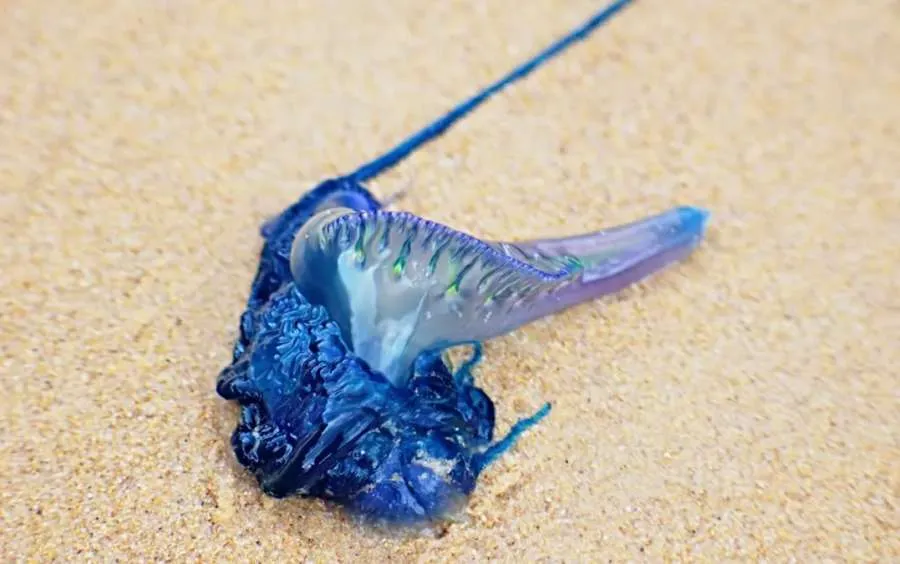
Portuguese man o' war sightings have become increasingly common around the Canary Islands in recent years. Although often mistaken for jellyfish, these fascinating but dangerous marine creatures can deliver an extremely painful sting, making it important to know how to stay safe if you encounter one.
With several recent sightings on beaches across the Canary Islands, beachgoers are once again being reminded to keep their distance from them as their sting can cause severe pain and, in rare cases, serious medical complications.
Despite its jellyfish-like appearance, the Portuguese man o' war is not actually a jellyfish. It is a floating colony of specialised organisms, known as hydrozoans, that work together as a single unit.
Why are they found in the Canary Islands?
According to marine biologists, the Portuguese man o' war is an Atlantic species, making the Canary Islands part of its natural range.
Unable to swim under its own power, it drifts across the ocean, carried by winds and currents. Its distinctive blue-purple gas-filled float acts like a sail, allowing the wind to move it across the water.
Recent reports of Portuguese man o' war appearing in northern Spain's Cantabrian Sea are thought to be linked to rising sea temperatures, which are allowing the species to spread into areas where it was previously uncommon.
Why are they so dangerous?
While the floating blue bladder is easy to spot, the real danger lies beneath the surface.
The tentacles can typically reach up to 10 metres, although in some cases they may extend as far as 50 metres.
These tentacles contain millions of microscopic stinging cells that inject a powerful venom with neurotoxic, cytotoxic and cardiotoxic effects, allowing the colony to immobilise its prey within seconds.
Even specimens washed up on the beach remain dangerous, as the venom can stay active long after it has died.
For this reason, experts warn:
- Never touch a Portuguese man o' war, even if it appears dead.
- Keep well away if you see one floating in the sea.
- If one is spotted, move away in the direction it is drifting from, rather than swimming behind it, where long trailing tentacles may be invisible beneath the surface.
What should you do if you're stung?
A sting from a Portuguese man o' war is extremely painful, but for most healthy adults it is not usually life-threatening.
Children, elderly people and anyone with underlying health conditions or severe allergic reactions are at greater risk of serious complications and should seek urgent medical attention if symptoms worsen.
Common symptoms include:
- Severe burning pain.
- Intense itching.
- Red, raised skin lesions.
- Nausea.
- Vomiting.
- Fever.
- General discomfort.
First aid: what you should do
If you are stung:
- Leave the water immediately.
- Carefully remove any visible tentacles without touching them directly.
- Rinse the affected area only with seawater.
- Immerse the affected area in warm (not scalding) water, as heat can help break down the venom and relieve pain.
- Seek medical assistance if symptoms are severe or if the person has difficulty breathing, feels faint or shows signs of an allergic reaction.
What you should never do
Health experts strongly advise against several common myths about treating stings.
Do not:
- Rinse the sting with fresh water, as this can trigger more venom to be released.
- Rub the affected area.
- Dry it vigorously with a towel.
- Apply vinegar, ammonia, alcohol or urine, as none of these remedies have been shown to help with Portuguese man o' war stings.
Stay alert on Canary Islands beaches
Portuguese man o' war sightings tend to increase when weather and sea conditions carry them towards the coast.
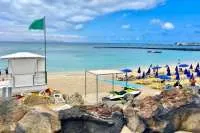
If lifeguards display warning flags or close a beach due to their presence, visitors are advised to follow instructions and stay out of the water until it is declared safe again.
Even if they appear stranded on the sand, they should never be handled, as their tentacles can still deliver a painful sting hours after washing ashore.
Share: