
Trading and the islands' expats: What British residents should know before they start
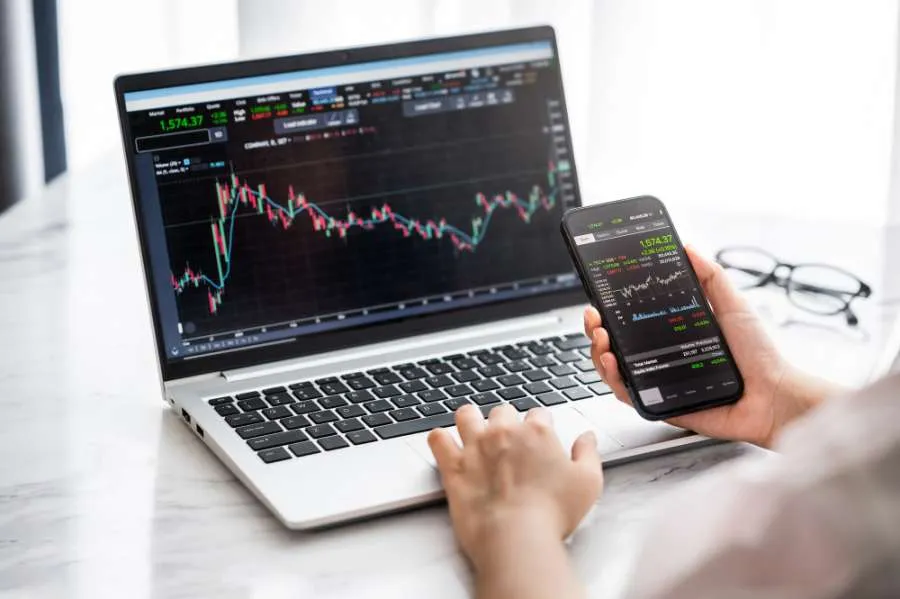
Financial trading has quietly become a common activity among British residents across the Canary Islands, and it now spans two very different groups. At one end are younger expats: remote workers, hospitality staff, seasonal workers and self-employed arrivals who came for the climate and the cost of living. They trade on phone apps, often daily, and most of what they know comes from social media.
At the other end are retired residents. Many hold a pension lump sum or savings from a property sale in the UK, and are looking for income at a time when the euro-sterling exchange rate affects every monthly transfer. This group is also the one most often targeted by cold calls and unsolicited approaches.
Both groups are exposed. Neither is exposed in quite the same way.
What the word actually means
So, what is trading? At its simplest, it means buying and selling financial instruments to profit from short-term price movements, over weeks, days or sometimes minutes.
That is not the same as investing, which means holding a stake in something productive for years and earning a return as it grows. The apps look similar. The two activities are not versions of each other, and confusing them is where a lot of money goes.
What gets traded
Shares are part-ownership of listed companies. Bonds are loans to governments or companies, paying interest over a fixed term.
Currencies are exchanged on the foreign exchange market — the same market anyone here uses when moving money between a UK account and a euro account, whether they think of it that way or not.
Commodities include oil, gold and silver. These are rarely bought outright, for obvious reasons. Exposure normally comes through derivatives: contracts that track an asset's price without giving you any ownership of it.
The term that costs people the most
Leverage is the concept worth understanding before anything else, because it is where inexperienced traders lose money fastest.
It allows a position much larger than the money deposited. At ten-to-one, €1,000 controls €10,000 of exposure. A 1% move in your favour earns €100 — 10% of your capital. A 1% move against you loses exactly the same amount.
The amplification is identical in both directions, and it shortens the time available to react. That is why regulated firms are required to publish the proportion of their retail customers who lose money on these products. Across the industry, the figure sits between 70% and 80%.
Two groups, two different risks
For younger residents, the danger is usually frequency. Every trade crosses the gap between the buying and selling price, and that cost is paid twice on every round trip. Someone placing twenty trades a month pays it forty times. The strategy has to earn back all of that before producing a single euro of profit, which is why it is entirely possible to be right more often than wrong and still finish the year down.
For older residents, the danger is usually concentration and pressure. Capital that has to last thirty years does not behave like capital that can be replaced by working another season. A single leveraged position sized wrongly can do damage that cannot be recovered from, and no return is worth that trade-off. Retired expats are also disproportionately approached by firms operating without authorisation, precisely because the money is in one place and the approach can be made by telephone.
The checks that matter here
Financial regulation is territorial, and this is where island residents get caught out.
A firm authorised in Britain is not automatically permitted to serve you in Spain. Since Brexit, the automatic arrangements between the two systems no longer apply, so the provider you used at home may or may not be allowed to deal with you now that you live here.
Three things are worth confirming before any money moves.
Is the firm registered with the CNMV, Spain's market regulator? The register is public and free to search, and both the CNMV and the UK's Financial Conduct Authority also publish lists of firms known to be operating without permission.
Which compensation scheme covers your account, and up to what limit?
And which country's tax rules apply to you? That is determined by where you are resident, not by which passport you hold — a point that catches out a great many British residents here, and one where a local gestor or tax adviser earns their fee.
The warning signs
Pressure to decide quickly. Guaranteed returns. A "personal account manager" who rings repeatedly and becomes friendly. Requests to send money to an individual's account, or in cryptocurrency. Difficulty withdrawing funds once they have been deposited.
Any single one of these is reason to stop. Money lost to unauthorised firms is very rarely recovered, and the police work involved crosses borders.
The short version
Understand the product well enough to explain how it loses value. Check the firm on the CNMV register. Sort out the tax position for where you actually live. Keep positions small enough that the worst case is survivable.
And never commit money you would genuinely miss.
Capital is at risk. Leveraged products carry a high risk of rapid loss and are not suitable for everyone.
Share: