
70% of foreign-language 112 emergency calls in the Canary Islands are in English
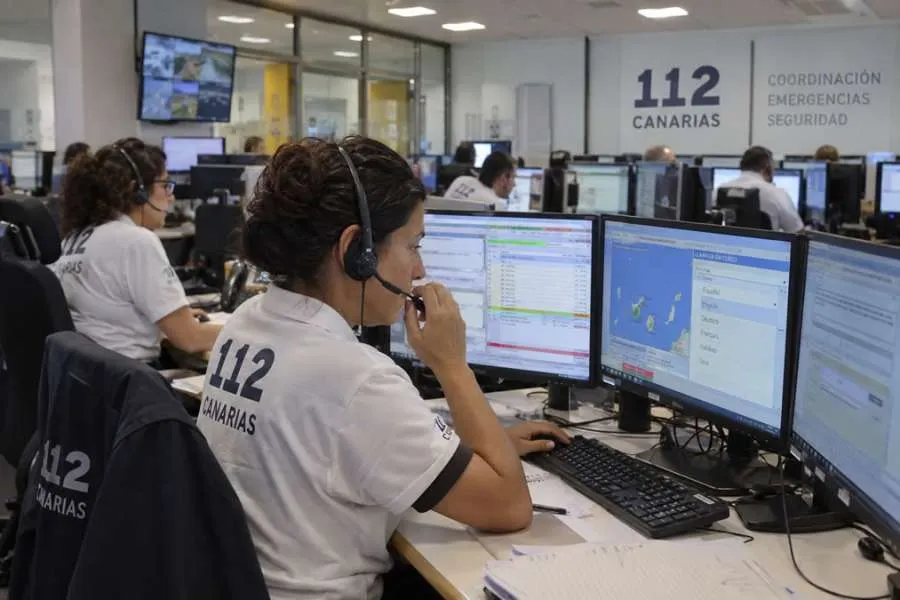
The Canary Islands’ 112 emergency service handled almost 14,000 calls in languages other than Spanish during the first eight months of 2026, with English accounting for seven out of every ten.
Figures released by the Canary Islands Government show that the Emergency and Security Coordination Centre (CECOES 112) dealt with 13,867 calls in other languages up to 31st August.
English was by far the most commonly used foreign language, accounting for 9,728 calls, or 70% of the total.
German was a distant second with 1,820 calls, followed by Italian with 1,256 and French with 938.
The figures underline the importance of multilingual emergency assistance in a region which welcomes millions of international tourists every year and is also home to a substantial foreign resident population.
For British and Irish visitors in particular, the figures provide reassurance that calling 112 does not require the caller to speak Spanish.
What happens if you call 112 and don't speak Spanish?
The Canary Islands' 112 service provides direct assistance in five languages: Spanish, English, German, Italian and French.
However, its multilingual capabilities extend much further.
A translation platform allows emergency operators to deal with communications in more than 50 additional languages when necessary, including Danish, Russian and Chinese.
This is particularly important in emergency situations, when callers may need to explain their location, the condition of an injured person or the nature of an incident quickly and accurately.
The latest figures were presented during a working meeting organised by the Canary Islands Directorate General of Emergencies with representatives of the consular corps.
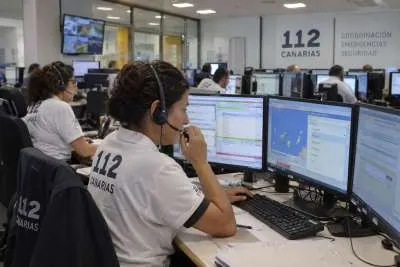
Representatives were shown how the CECOES 112 operations room in Santa Cruz de Tenerife works and how emergency services coordinate incidents involving foreign nationals.
The meeting also examined procedures for communicating with consulates when their citizens are involved in emergencies, as well as the protocols used when the Canary Islands Government activates civil protection and emergency plans.
Officials stressed that the multilingual system is intended to prevent language becoming an obstacle when somebody needs urgent assistance.
Foreign-language provision has formed part of the service since 112 began operating in the Canary Islands in May 1998, reflecting both the islands’ international tourism industry and their diverse resident population.
Representatives from a number of countries participated in the latest meeting, including Germany, Hungary, Austria, Norway, Argentina, Honduras, Ecuador, Brazil, the Czech Republic and Italy.
The European emergency number 112 can be used throughout the Canary Islands for urgent situations requiring services such as police, firefighters, ambulances or other emergency resources.
For visitors, the latest statistics demonstrate just how routinely the service deals with people who do not speak Spanish: during the first eight months of this year alone, an average of around 40 foreign-language calls were handled every day, with the overwhelming majority made in English.
Share: