
Tenerife South passenger numbers fall as other Canary Islands airports grow
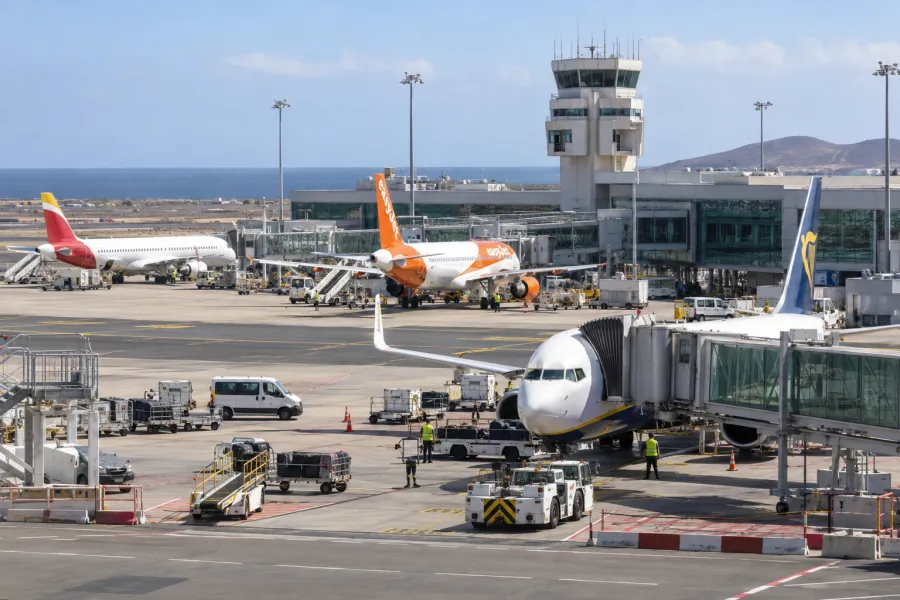
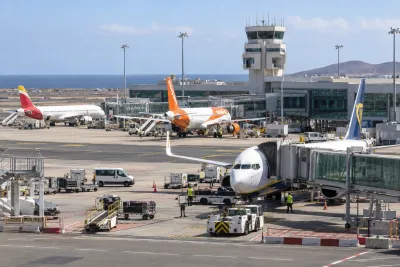
Passenger traffic at Tenerife South Airport fell by 4.2% during August, making it the notable exception as most of the Canary Islands' other major airports recorded year-on-year growth.
New figures released by airport operator Aena show that 1,064,586 passengers passed through Tenerife South during August 2026.
That represents a 4.2% decrease compared with August last year and contrasts with increases at Gran Canaria, Lanzarote and Fuerteventura.
Across all Canary Islands airports, passenger numbers actually increased by 0.8%, reaching 4,768,328 during the month.
The figures are particularly interesting for Tenerife South because the airport is the main international gateway for the island's holiday resorts and handles huge numbers of British and Irish visitors travelling to destinations including Costa Adeje, Playa de las Américas and Los Cristianos.
Gran Canaria remains the busiest airport
Gran Canaria was the busiest airport in the archipelago in August, handling 1,334,497 passengers, up 3.1% from the same month in 2025.
Tenerife South remained in second place despite its decline.
César Manrique-Lanzarote Airport handled 830,015 passengers, up 0.5%, while Tenerife North-Ciudad de La Laguna recorded 699,814, an increase of 2.4%.
Fuerteventura Airport handled 640,687 passengers, representing growth of 1.9%.
The smaller island airports also recorded increases, with La Palma seeing the largest percentage rise at 7.2%, reaching 148,857 passengers.
El Hierro increased 3.1% to 35,158 passengers and La Gomera rose 3% to 14,714.
The Tenerife South figure therefore stands out against a generally positive month elsewhere in the archipelago.
International traffic across the islands still increased in August
Of the 4.76 million passengers recorded across Canary Islands airports, more than 4.75 million were travelling on commercial flights.
Domestic commercial flights accounted for 2,213,956 passengers, up 1.2% year-on-year, while international services carried 2,545,185 passengers, an increase of 1.1%.
The airports also handled 41,702 aircraft movements during August.
However, the longer-term figures show a slightly different picture.
Between January and August, Canary Islands airports handled 36,314,210 passengers, representing a small decline of 0.2% compared with the same eight months of 2025.
International passenger numbers during that period fell by 0.5%, while domestic traffic increased by 0.6%.
Why is Tenerife South down?
The figures themselves do not establish why Tenerife South experienced the 4.2% decline, so it would be premature to attribute the change to falling demand for Tenerife holidays.
Monthly airport passenger totals can be influenced by airline capacity, scheduling, the timing of school holidays, route changes and comparisons with particularly busy periods during the previous year.
Tenerife remains one of the Canary Islands' largest tourism markets and Tenerife South continues to handle more than one million passengers a month even during August.
What makes the latest figures interesting is the contrast with the other principal tourist islands.
It will therefore be worth watching the figures for September and the start of the winter flying season to see whether August proves to be an isolated monthly decline or develops into a broader trend.
For British holidaymakers, there is currently nothing in the figures suggesting any practical change to airport operations or existing flights. They simply provide an early indication that passenger growth across the Canary Islands is not being shared equally between the islands.
Share: