
Study reveals how much Tourist Tax holidaymakers would pay in the Canary Islands?
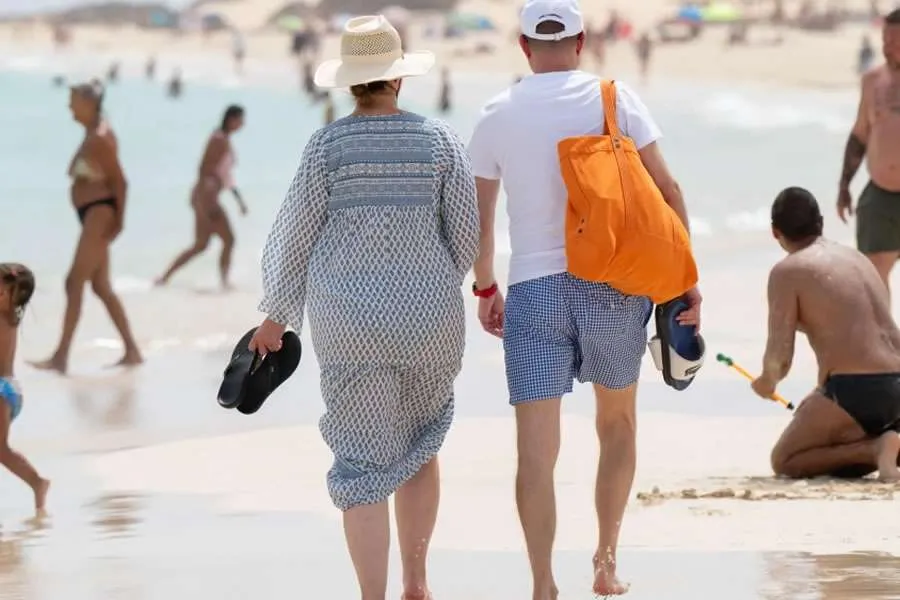
A tourist tax of €2 per person per night could be the most acceptable level for visitors to the Canary Islands and potentially raise around €131 million a year, according to a new study.
Researchers from the University of Las Palmas de Gran Canaria (ULPGC) analysed how much holidaymakers would be prepared to pay for every night they stay in the Archipelago, as the long-running debate over introducing a Canary Islands tourist tax continues.
The research, published in the scientific journal Tourism Economics, suggests that €2 represents one of the best compromises between generating revenue and maintaining tourists' willingness to pay.
For a couple staying for seven nights, that would mean an additional €28 per holiday, while a family of four would pay €56 for a week, assuming the tax applied equally to adults and children.
However, it is important to stress that this is a study, not a new tax that has been approved or introduced in the Canary Islands.
€2 per night could raise €131 million
Researchers analysed responses from 35,377 tourists who visited the Canary Islands between the second quarter of 2024 and the first quarter of 2025, using data from the Canary Islands Statistics Institute's Tourist Expenditure Survey.
Their model found that a voluntary charge of €2 per person per night could be accepted by approximately 52% of tourists.
Based on around 15 million visitors annually, researchers calculated that this could generate approximately €131 million per year.
Increasing the amount could potentially raise more money per visitor, but would also reduce the proportion of tourists willing to pay it.
Among visitors who specified the maximum they would be willing to contribute, 37.6% put their limit at €1 per night, while another 32.4% said €2. Smaller percentages were prepared to pay €3 or more.
British and Irish tourists less keen
Not all nationalities responded in the same way. After accounting for factors such as income, accommodation and length of stay, researchers found that visitors from Germany, Belgium and the Netherlands were more likely to accept a tourist tax.
Spanish and Italian visitors were less likely to accept it, as were tourists from the UK and Ireland.
Income was another significant factor, with tourists from higher-income households generally more willing to pay.
Five-star hotel guests more willing to pay
The type of accommodation also influenced attitudes towards a potential tourist tax.
Guests staying in five-star hotels were more likely to be willing to contribute, while visitors staying free of charge with friends or relatives were less likely to do so.
The length of the holiday also matters.
Because the proposed model charges tourists for every person and every night, the total bill increases considerably for longer stays. Researchers found that the longer tourists stayed in the Canary Islands, the less willing they were to pay the charge.
Attitudes also varied depending on which Canary Island tourists visited.
La Palma recorded the highest level of direct acceptance at 69.3%, followed by Tenerife at 53.8%, Lanzarote at 53.7% and Fuerteventura at 53.1%.
In Gran Canaria, 51.4% of visitors said they would be willing to pay.
Across the Canary Islands as a whole, Tourist Expenditure Survey figures for 2024 showed 53.2% of visitors said they would be prepared to pay a tourist tax, while 27.2% were unsure and approximately 19.5% said they would not pay one.
Tourists want to know where the money goes
The amount charged isn't the only consideration. Tourists also appear interested in what the money would actually be used for.
According to the ISTAC data, 17.5% of all visitors said they would pay a tourist tax if the revenue was specifically used to improve and protect the environment, making this the individual purpose attracting the strongest support.
Others favoured using the money to improve residents' quality of life, support economic development or improve tourist areas.
The findings suggest that explaining clearly where the money goes could be almost as important as deciding how much tourists are charged.
No Canary Islands tourist tax yet
Despite years of debate about introducing a tourist tax, there is currently no Archipelago-wide tourist tax of €2 per person per night.
The figure identified by the ULPGC researchers is a theoretical level based on tourists' responses and economic modelling, rather than an amount approved by the Canary Islands Government.
The regional government has previously resisted calls for a general tourist tax, favouring revenue collection through the Canary Islands' existing taxation system, including IGIC.
However, with millions of tourists visiting the islands every year and increasing pressure on infrastructure, housing and protected natural areas, the debate is unlikely to disappear.
Share: