
First 3D-Printed housing development has begun in Adeje
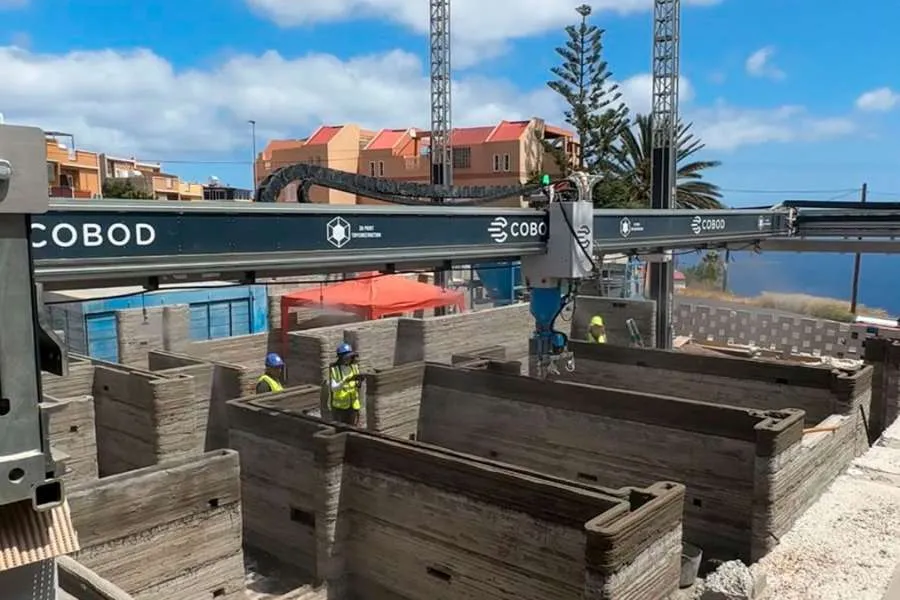
A pioneering construction project is underway in Adeje, in the south of Tenerife, where a company has begun building what will become the first large-scale 3D-printed housing development in the Canary Islands.
The technology, which uses giant 3D printers to create concrete walls layer by layer, could offer a new solution to the housing crisis affecting Spain and particularly the Canary Islands, where rising demand and limited supply have made finding affordable homes increasingly difficult.
Industry estimates suggest the system could cut construction time by up to 70% and reduce costs by around 25% compared with traditional building methods.
From pilot homes to a 16-property development
The technology is being introduced locally by 3D Print Construction, which has already completed a pilot project — a 160m² detached home in Tabaiba Alta, where the structural walls were printed in just 12 days.
The next step is far more ambitious: a development of 16 homes in Adeje, which will become the first project of this scale using 3D printing in the Canary Islands. The company estimates the structure of the building could be completed in around two months.
For comparison, constructing a 250m² house using conventional methods typically takes six to seven months, while 3D printing can reduce that stage to around two weeks.
How the technology works
The current printer operates at a rate of about one cubic metre of material per hour, though the company aims to increase this capacity to four cubic metres per hour.
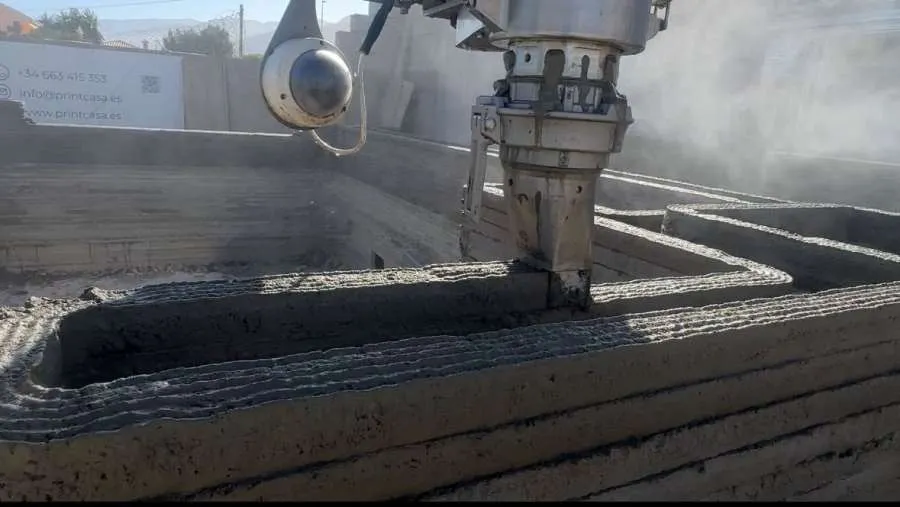
The process begins with a detailed digital model of the building created using BIM (Building Information Modelling). Specialised software converts the design into instructions for the printer, which then deposits layers of concrete with millimetre precision.
Foundations and basements are still built using traditional methods before the printer is installed. The machine operates on a large metal frame supported by four towers around six metres high. A motorised print head moves along rails, laying down the concrete mixture layer by layer.
Before printing begins, engineers also install structural reinforcements and technical channels for insulation and utilities such as plumbing and electricity.
Fewer workers, new roles
Another major difference with 3D printing construction is the dramatic reduction in manpower required.
While a conventional build requires large teams of bricklayers, labourers and supervisors, the printing system can operate with as few as three people. Their work focuses on supervising the process, preparing the material mix and maintaining the machine.
According to project leaders, the shift toward automated construction is partly driven by a shortage of skilled labour in the building sector. Specialised skills are not necessarily required, as any builder can learn to use the system with a relatively simple process.
Potential for social housing
Beyond private developments, the company is already in discussions with the Tenerife Cabildo to explore how the technology could be used in social housing projects.
Developers argue that 3D printing not only reduces costs and construction time but also allows greater architectural flexibility, meaning affordable housing does not need to follow repetitive or unattractive designs.
Project leaders believe the technology could significantly change how homes are built in the future.
Share: