
New data says there is a 77% chance of a volcanic eruption in the Canary Islands within 50 years
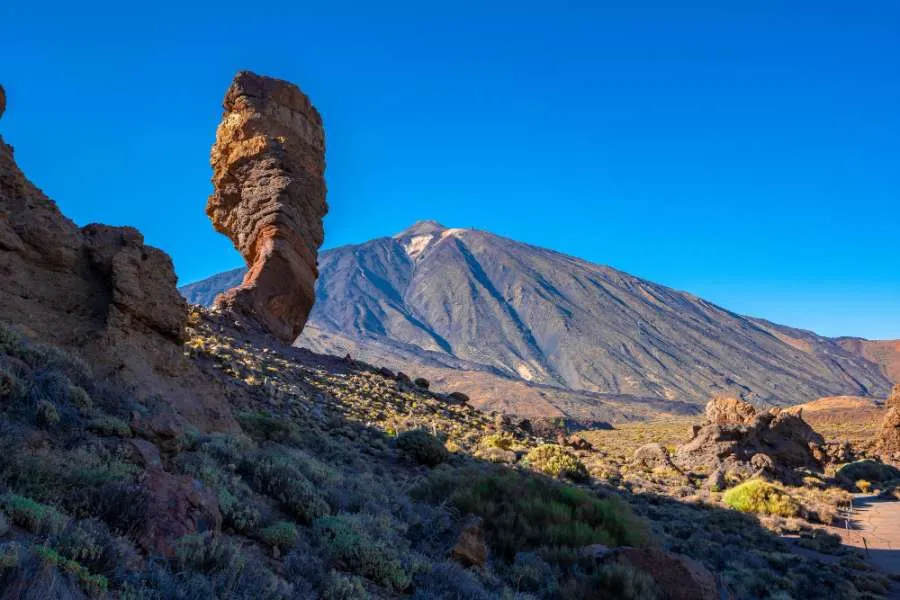
The Spanish Government has officially recognised a 77.69% probability of at least one volcanic eruption occurring somewhere in the Canary Islands within the next 50 years, according to new emergency planning regulations published in the Official State Gazette (BOE).
The figure forms part of updated national Civil Protection legislation, which came into effect today, Sunday 11th October, replacing regulations that have been in place since 1996.
However, authorities stress that the calculation is a long-term statistical assessment and does not mean an eruption is imminent or identify which island might be affected.
The new legislation is intended to improve Spain's preparedness for future volcanic emergencies, incorporating scientific advances and lessons learned from previous eruptions, including the devastating 2021 eruption on La Palma.
What does the 77.69% probability actually mean?
The figure appears in Order INT/1071/2026, published in the BOE on Saturday 10th October, following approval by Spain's Council of Ministers on 6th October.
The document establishes a scientific threshold for determining which parts of Spain require specific volcanic emergency planning.
Under the new regulations, areas with a probability of at least 5% of experiencing an eruption over a 50-year period must be covered by the national volcanic risk planning framework.
The Canary Islands are the only region of Spain to exceed that threshold, with an estimated probability of 77.69%.
By comparison, the volcanic region of La Garrotxa in Catalonia has an estimated probability of just 1.09% over the same period.
Importantly, the Canary Islands figure applies to the archipelago as a whole. It does not mean that Tenerife, Gran Canaria, Lanzarote, Fuerteventura or any other individual island has a 77.69% chance of experiencing an eruption.
Nor does it suggest that scientists have detected an immediate volcanic threat.
One eruption every 33 years?
The government document also refers to an estimated volcanic recurrence interval of approximately 33 years, based on the archipelago's historical volcanic activity.
This does not mean an eruption will occur every 33 years. Volcanic activity is irregular, and periods of relative inactivity can be followed by eruptions without following any fixed timetable.
The 33-year figure is a statistical reference used in long-term risk assessments, rather than a prediction of when the next eruption will take place.
The Canary Islands have experienced several eruptions in modern history, including the 2021 eruption on La Palma, the 2011–2012 submarine eruption near El Hierro and the 1909 eruption of Chinyero in Tenerife.
These events demonstrate why volcanic monitoring and emergency planning remain important across the islands.
New emergency plans for the Canary Islands
Under the updated legislation, authorities must strengthen their preparations for possible volcanic emergencies, with particular attention to areas where people, homes and essential infrastructure could be affected.
The regulations require improvements in several key areas, including:
- Detailed volcanic hazard and risk maps identifying potentially vulnerable locations.
- Improved scientific monitoring and early-warning systems.
- Clearer evacuation procedures and designated safety areas.
- Better coordination between emergency services, local councils, island governments and national authorities.
- Public information and guidance on how to respond during volcanic emergencies.
- Protection of essential services, roads, utilities and communications infrastructure.
The legislation also requires emergency planning to account for both permanent residents and temporary populations, including tourists.
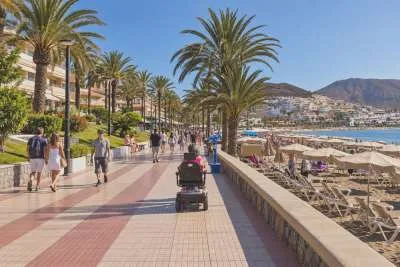
This is particularly relevant to the Canary Islands, where millions of visitors arrive each year and may be unfamiliar with local emergency procedures.
Greater attention to volcanic gases and earthquakes
The new regulations recognise that volcanic emergencies involve considerably more than lava flows.
Emergency plans must also consider the risks associated with volcanic gases, earthquakes, ground deformation, landslides, falling ash and other secondary hazards.
Volcanic gases receive particular attention because dangerous conditions can persist even after an eruption has ended.
The updated framework also explicitly includes submarine eruptions, recognising the potential consequences for coastal communities, maritime activities and infrastructure.
Authorities will be required to assess risks before, during and after eruptions, including situations where volcanic activity continues to affect communities long after the initial event.
Lessons from the La Palma eruption
The 2021 eruption on La Palma demonstrated the enormous social and economic consequences that volcanic activity can have on island communities.
Thousands of residents were forced to leave their homes, while lava flows destroyed properties, roads, agricultural land and infrastructure.
The eruption continued for almost three months, and its consequences are still being felt five years later.
The experience highlighted the importance of early warnings, coordinated evacuations, accurate risk mapping and long-term recovery planning.
Spain's new regulations are designed to incorporate these lessons into a more comprehensive national approach to volcanic emergencies.
For residents and holidaymakers, the message is one of preparedness rather than alarm.
The Canary Islands are volcanic by nature, and understanding that risk is essential to ensuring that communities and visitors can be protected should another eruption occur.
Share: