
Historic total solar eclipse sweeps across Spain for first time in over a century
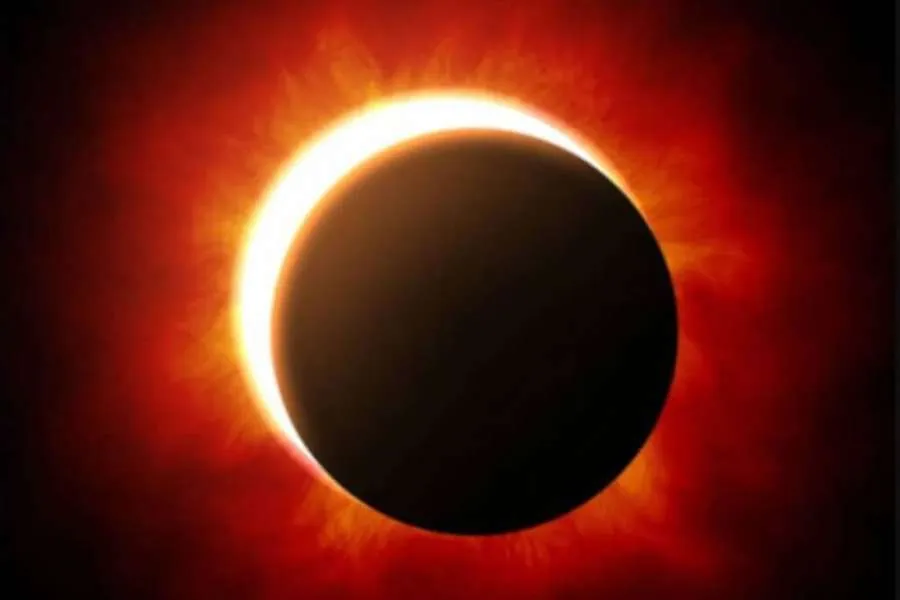
More than half of Spain was plunged into darkness this evening (Wednesday) as a spectacular total solar eclipse crossed the country, an astronomical event not witnessed from mainland Spain since 1912, turning daylight into darkness shortly before sunset.
The path of totality travelled from west to east across the country during the evening, providing spectacular scenes as the Moon completely blocked the Sun in some areas before it disappeared below the horizon.
The Canary Islands were outside the path of totality but were still treated to an impressive partial eclipse, with a significant proportion of the Sun obscured by the Moon.
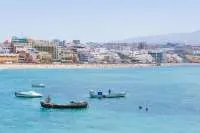
The eclipse began in the Canaries shortly after 7:30pm, with thousands of residents and visitors across the islands watching the phenomenon from beaches, viewpoints and specially organised observation points.
The path of totality was around 100 kilometres wide and crossed 13 regions of Spain: Galicia, Asturias, Cantabria, the Basque Country, La Rioja, Navarra, Castilla y León, Madrid, Castilla-La Mancha, Aragón, Catalonia, Valencia, and the Balearic Islands.
Galicia was the first part of Spain to experience totality, while the Balearic Islands were among the last places to see the phenomenon before sunset.
The longest period of complete darkness, lasting close to one minute and 40 seconds, occurred along a band crossing northern and central Spain, including areas around Oviedo, León, Palencia, Burgos, Soria and southern Aragón.
Madrid and Barcelona were outside the main path of totality but still experienced an extremely impressive partial eclipse, with around 80% to 90% of the Sun obscured.
A historic night for the Canary Islands
Although Wednesday's eclipse was not total in the Canary Islands, the Archipelago has its own place in Spain's eclipse history.
On 2nd October 1959, a total solar eclipse crossed the Canaries, plunging parts of the islands into darkness for more than two and a half minutes.
The event became one of the most memorable astronomical phenomena of the 20th century in the islands, at a time when eclipses were far less widely understood by the general public.
For many Canarians, Wednesday's spectacle therefore revived memories and stories passed down from the famous eclipse of 1959.
Eclipse followed by the peak of the Perseids
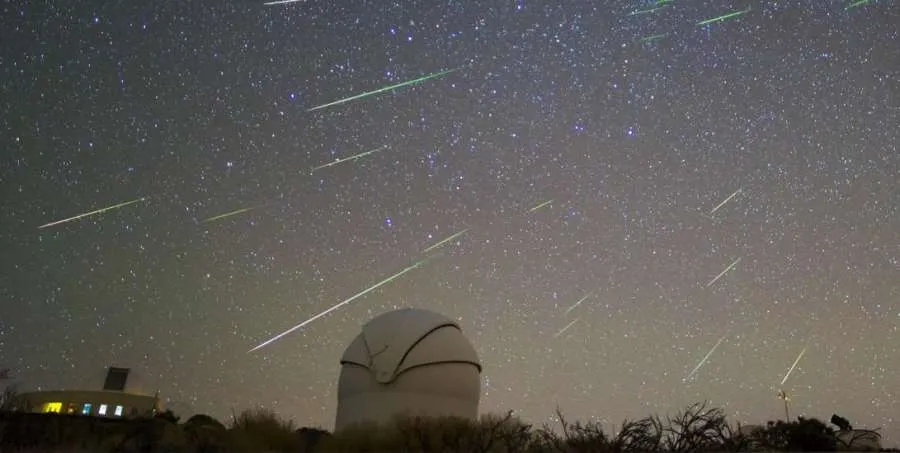
The eclipse isn't the only spectacular event in the skies above the Canary Islands tonight. Just hours later, the Perseids meteor shower will reach its annual peak during the night, giving residents and holidaymakers the chance to experience two major astronomical events on the same night.
Conditions are particularly favourable this year because the peak coincides with a New Moon, meaning there will be virtually no moonlight interfering with the display. Under clear, dark skies, observers could potentially see dozens of shooting stars per hour, with rates of up to around 100 meteors per hour under ideal conditions.
The Perseids are expected to be especially active from late tonight into the early hours of Thursday morning. The official peak is forecast between 3:00am to 5:00am, however, plenty of meteors should be visible before then, particularly after midnight from locations away from streetlights and other sources of light pollution.
This extraordinary combination means the Canaries can experience a partial solar eclipse at sunset followed by one of the year's best meteor showers after dark, making it a particularly memorable night for stargazers across the islands.
Share: