
Smoking ban on bar terraces, beaches, outdoor sports events, concerts and festivals approved by Spanish Government
Spain has taken a major step towards tightening its anti-smoking laws after the Council of Ministers approved a sweeping reform that will dramatically expand smoke-free areas across the country, including here in the Canary Islands.
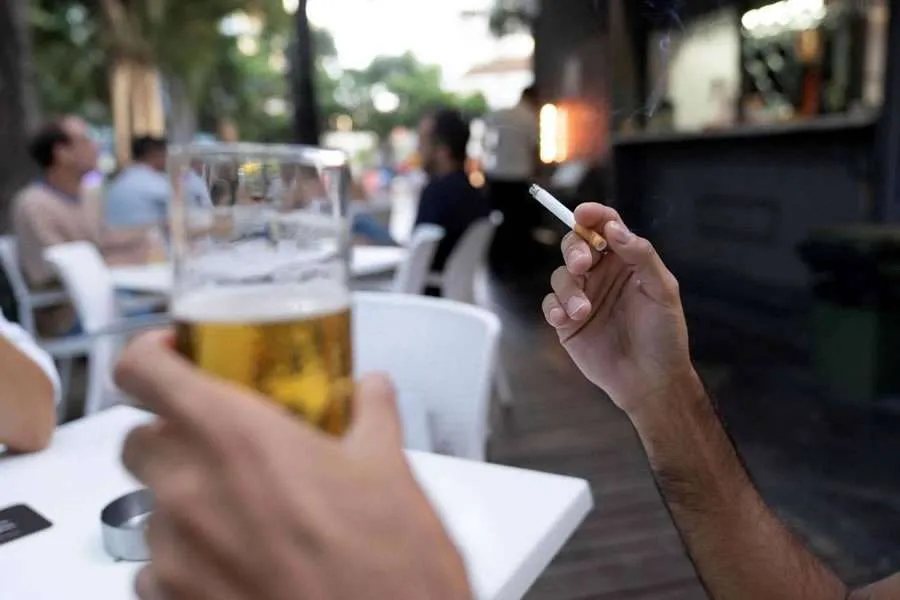
The legislation, which must still pass through Parliament before becoming law, will ban smoking and vaping in a wide range of outdoor public spaces, including bar and restaurant terraces, beaches, public swimming pools, university campuses, all sports facilities and all outdoor events.
When approved, it will be the biggest overhaul of Spain's tobacco laws since smoking was banned inside bars, restaurants and other enclosed public spaces more than a decade ago.
More smoke-free public spaces
Under the plans, smoking and the use of electronic cigarettes would no longer be allowed in:
- Bar and restaurant terraces
- Beaches and riverbanks
- Public swimming pools
- Sports facilities
- University campuses
- Outdoor concerts, festivals and public events
The restrictions will also apply inside commercial vehicles, unless they are used solely for private purposes.
In addition, a 15-metre smoke-free zone would be created around schools, hospitals, healthcare centres, research facilities, museums, libraries, children's playgrounds and other locations frequently used by young people.
Within these areas, both traditional tobacco products and e-cigarettes would be prohibited. Nicotine pouches, however, would not be included in this particular restriction because they do not produce smoke or vapour.
New fines for underage smokers
For the first time, the proposed law will make it illegal for anyone under the age of 18 to smoke or use vaping products.
Until now, Spanish law prohibited the sale of tobacco to minors but did not directly penalise young people for smoking.
Anyone caught breaking the rules could face fines starting at €200. Where the offender is a minor, parents or legal guardians would be responsible for paying the penalty, although community service could be offered as an alternative.
Health Minister Mónica García said the reform is aimed at protecting people from second-hand smoke while helping to reduce nicotine addiction among teenagers.
Vapes treated the same as tobacco
The new legislation would place electronic cigarettes and vaping devices under the same legal restrictions as traditional tobacco products, regardless of whether they contain nicotine.
The Government says this will close a legal loophole that has allowed vaping products to be widely sold in convenience stores, shops and other non-specialist retailers.
Under the new rules, they would only be available from authorised outlets, such as licensed tobacco shops.
Officials hope the move will reduce the appeal of colourful vaping products that are often marketed as a safer alternative and discourage young people from developing nicotine addiction.
Nearly half of teenagers have tried vaping
The Government says the tougher rules are backed by growing evidence of vaping among young people.
According to Spain's 2025 ESTUDES survey, 49.5% of teenagers aged between 14 and 18 have tried an e-cigarette, while the number who reported vaping during the previous month has almost doubled since 2019, rising from 14.9% to 27.1%.
Daily cigarette smoking among teenagers has fallen to 4.3%, the lowest level since records began in 1994. However, 15.5% admitted smoking at least once during the previous month.
Tobacco advertising to face tighter controls
The proposed reform would also introduce strict new rules on tobacco and vaping advertising.
Displays promoting tobacco products would be banned from shop windows, hospitality venues and public spaces. The restrictions would also cover vending machines, websites and other forms of direct or indirect promotion.
Television broadcasters and online media platforms would no longer be allowed to show presenters, guests or contributors using tobacco products or vaping devices, while branding, logos and product placement would also be prohibited.
Parliamentary approval still required
Despite being approved by the Council of Ministers, the legislation has not yet become law.
It will now be debated in Spain's Parliament, where the Government must secure enough support for it to pass. Opposition parties, including the Popular Party (PP), have said they will examine the final text before deciding whether to back the reforms.
The PP has voiced support for stronger restrictions on youth vaping but has raised concerns about the possible impact of banning smoking on hospitality terraces, particularly for bars, cafés and restaurants.
If approved, the new legislation would mark one of Spain's most significant public health reforms in recent years, with far-reaching changes affecting residents and visitors alike.
Share: