
Large 50cm jellyfish washes up on popular beach in Lanzarote
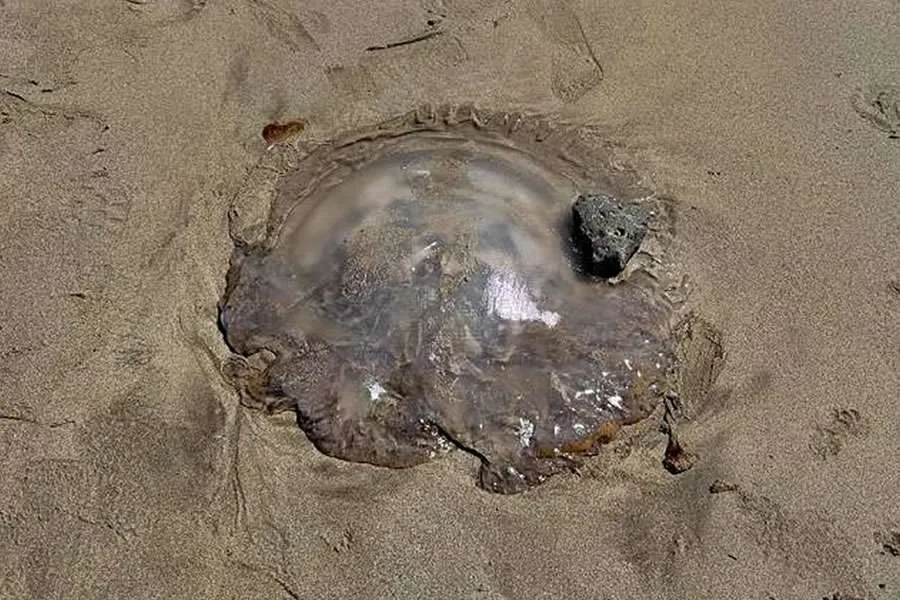
A large jellyfish measuring around 50 centimetres was discovered yesterday (Sunday) on Famara beach in Lanzarote, prompting warnings to beachgoers not to touch it even though it was found stranded on the sand.
According to the lifeguards, the specimen measures approximately half a metre in diameter, making it a particularly noticeable visitor to one of the island's best-known beaches.
So far, it is believed to be the only jellyfish of its type found in the area, and there have been no reports of anyone being stung, but the public are advised to be aware if bathing in the area.
Authorities and lifeguards are nevertheless advising beachgoers not to touch the jellyfish, even if it appears to be dead or has been washed up on the beach. Jellyfish tentacles can remain capable of stinging after the animal has become stranded.
What type of jellyfish is it?
The specimen has been identified as a barrel jellyfish (Rhizostoma pulmo), a species known for its unusually large size and distinctive, robust body.
Barrel jellyfish can grow to considerable dimensions and, although their sting is generally considered less severe than that of the Portuguese man o' war, contact should still be avoided.
The sighting is particularly noteworthy because barrel jellyfish are not commonly seen along the coast of Lanzarote.
Changes in ocean currents, sea conditions and water temperatures can occasionally carry jellyfish into areas where they are not normally encountered, sometimes resulting in individual specimens washing up on beaches.
What should you do if you see one?
Anyone who comes across a jellyfish on a beach should avoid touching or moving it and should keep children and pets away from it.
This applies even when the animal is lying on dry sand, as its tentacles may still contain stinging cells capable of causing a painful reaction.
For the time being, there have been no reported stings at Famara and no indication of a wider influx of jellyfish in the area.
Share: