
Groundbreaking discovery at Loro Parque reveals how dolphins ‘see’ using sound
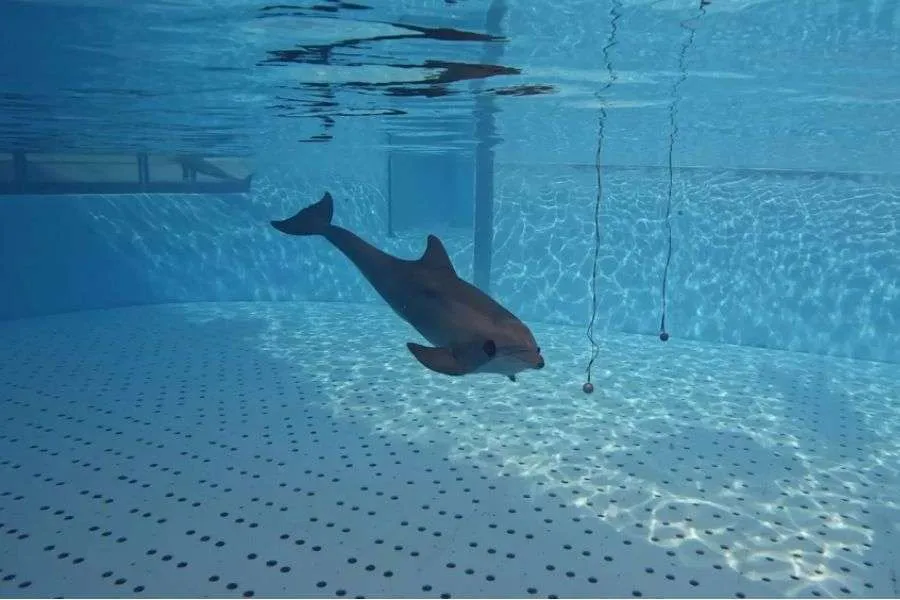
A groundbreaking international study carried out at Loro Parque in Tenerife has revealed how dolphins use sound and movement to identify different materials while swimming.
Researchers say it is the first study of its kind to show how bottlenose dolphins can distinguish between objects made from materials including plastic, aluminium, brass and steel using only echolocation, even when the objects look identical.
The research was conducted by scientists from the University of Southern Denmark and the Loro Parque Foundation. It provides new insight into how dolphins build a picture of their surroundings by producing ultrasonic clicks and interpreting the echoes that bounce back.
Two bottlenose dolphins at Loro Parque, Achille and Clara, took part in the research. They were trained to swim towards pairs of spheres suspended underwater and identify which was made from a particular material using sound rather than sight.
Highly sensitive underwater microphones and synchronised cameras recorded how the dolphins moved their heads, changed their swimming direction and adjusted their echolocation clicks immediately before making their choices.
According to the researchers, the dolphins effectively create a detailed mental representation of objects from the echoes they receive. Their movements also form an important part of the process, allowing them to scan objects from different positions as they approach.
The study also compared bottlenose dolphins with harbour porpoises under the same experimental conditions. Both species used similar movements to investigate objects, but differences in the frequency and structure of their sonar signals resulted in different abilities to distinguish between materials.
Scientists believe the findings could have important implications for marine conservation. A better understanding of how cetaceans rely on sound may help researchers assess how human-generated underwater noise affects their ability to navigate, communicate and find food.
Sara Torres, the scientist responsible for the project, said the research showed that dolphins actively adjust both their movements and sound production to determine the composition of objects around them.
She said understanding these abilities could help scientists develop more effective conservation measures tailored to the biology of individual cetacean species.
Loro Parque Group president Wolfgang Kiessling said the study demonstrated the organisation's commitment to scientific research and biodiversity conservation, as well as the importance of collaboration between animal care teams and international researchers.
The findings have been published in the Journal of the Acoustical Society of America. The project received funding from the Office of Naval Research, the Human Frontier Science Program and the Carlsberg Foundation.
Researchers hope the findings will ultimately improve understanding of how dolphins and other cetaceans experience their underwater environment, particularly as human activity increases noise levels in the world's oceans.
Share: