

Traffic problems? There are now two million vehicles on Canary Islands roads
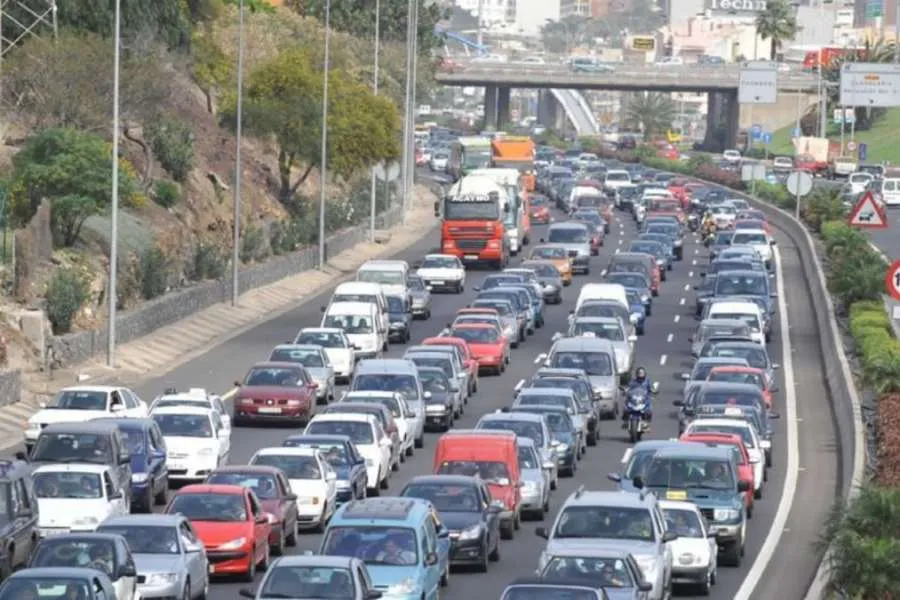
The number of vehicles on the roads in the Canary Islands has now reached the two-million mark, following the biggest annual increase recorded in the Archipelago since 2020.
Official figures from the DGT show that there were 1,977,854 registered vehicles in the Canary Islands at the end of 2025, an increase of 53,515 in just one year. That represents annual growth of 2.7%, significantly higher than in recent years, when the largest increases were around 40,000 vehicles.
A further 44,656 vehicles were registered between January and July 2026, according to data from the Canary Islands Statistics Institute (ISTAC). Although vehicles subsequently taken off the road still need to be deducted, the figures indicate that the total number of cars, motorcycles, buses, vans and lorries in the Islands has now exceeded two million.
More vehicles despite serious congestion
The continued increase comes as Tenerife and Gran Canaria struggle with increasingly congested roads, particularly the main routes connecting the north and south of the islands with their metropolitan areas.
Tenerife's TF-1 and TF-5 motorways are regularly affected by heavy traffic and lengthy queues, while congestion is also an everyday problem for thousands of motorists in Gran Canaria.
Free public transport has been available to eligible regular users in the Canary Islands since 2023, accompanied by additional routes and increased frequencies. However, this has not stopped the number of privately owned vehicles from continuing to rise.
A total of 81,865 new vehicles were registered in the Canary Islands during 2025, the strongest year for vehicle registrations since 2019.
Motorcycles becoming increasingly popular
One of the most noticeable changes has been the growing popularity of motorcycles, particularly among people looking for an easier way to get through congested urban areas and make shorter journeys.
Motorcycle numbers have increased by around 7% in each of the last two years, equivalent to approximately 13,000 additional bikes annually.
There are now 200,888 motorcycles registered across the Islands, as well as approximately 45,000 mopeds.
Together, motorcycles and mopeds account for 12.4% of all registered vehicles in the Canary Islands, compared with around 10% five years ago.
Nearly 1.3 million cars
Cars remain by far the largest category, with 1,287,198 registered, accounting for approximately 65% of the entire vehicle fleet.
The number of cars increased by 36,873 during 2025, a rise of 2.9%. This was almost three times the increase recorded the previous year, when 12,676 cars were added.
The province of Las Palmas (Gran Canaria, Lanzarote, and Fuerteventura) recorded the biggest overall increase, adding 31,264 vehicles and passing the one-million mark for the first time, with a total of 1,016,398.
In the province of Santa Cruz de Tenerife, which includes Tenerife, La Palma, La Gomera and El Hierro, the number increased by 22,251 to 961,456 vehicles.
More than half a million vehicles are over 25 years old
The figures also highlight the age of vehicles being driven on the Islands.
The average vehicle in the Canary Islands is 16 years old, around one year older than the national average.
Around 545,000 vehicles are at least 25 years old, equivalent to almost three in every ten vehicles on the road.
A further 40% are between 10 and 24 years old, while only around 15% are relatively new vehicles aged between one and four years.
Vehicles in Las Palmas province have an average age of approximately 15 years, compared with 16.6 years in Santa Cruz de Tenerife province.
Electric vehicles still a small minority
Petrol remains the dominant fuel type, accounting for approximately 67% of vehicles in the Canary Islands, while around one in three run on diesel.
Despite increasing efforts to encourage cleaner transport, there are still fewer than 22,000 electric vehicles registered across the Archipelago.
They account for just 1.1% of the total vehicle fleet, highlighting how far the Islands still have to go in the transition towards electric transport.
With vehicle numbers continuing to rise faster than in recent years, the latest figures are likely to add further pressure to calls for solutions to the Canary Islands' growing congestion problems.
Share: